Table of Content
- Introduction
- Who is an Ideal Candidate For Clear Aligners
- Why clear aligners are the clear choice
- Clear Braces for Adults
- Final Thoughts
There are many reasons to consider adult orthodontics. Maybe you had braces when you were younger and are no longer happy with the results, you weren’t able to receive treatment as a child, or your teeth have shifted with age. Whatever the reason, clear aligners can help anyone achieve the straight smile of their dreams.
There is no age limit for braces
While many people associate braces with adolescents, teeth straightening for adults is one of the most in-demand cosmetic dental services. Best yet, with clear aligners now available, metal braces are almost a thing of the past.
Made from transparent medical grade plastic and molded to fit your teeth snugly, clear aligners offer a discreet, comfortable, convenient, and affordable way to straighten your teeth as an older adult.
Who is an Ideal Candidate For Clear Aligners
Clear aligners help many adult patients, including those who:
- Were unable to access orthodontic treatment as a teen – braces were almost prohibitively expensive in years gone by, especially in multi-children households. This meant some families had to forgo treatment altogether, while others only considered it for more severe cases.
- Decided not to get braces earlier because of social stigma. Now, with the benefit of hindsight, many people wish they’d spent that year or two getting orthodontic treatment when they were younger.
- Had orthodontic treatment, like braces, previously but no longer like the results. This could be caused by not wearing retainers as recommended or simply because our teeth move as we age.
- Have developed a desire for straighter teeth after experiencing changes to their teeth throughout their lifetime.
Whatever your reason, most older people are just like you—looking to straighten their teeth because of their crooked smile. Though nothing to be ashamed of, a crooked smile can affect confidence and make them feel self-conscious. Sadly, this fact is no longer surprising when you consider that according to the American Academy of Cosmetic Dentistry, 99% of adults believe a bright smile is their most important asset.
Why clear aligners are the clear choice
In years gone by, orthodontic treatment has been associated with high costs and high levels of discomfort. Nowadays, when considering adult orthodontics, there are other factors that weigh up. For some people, it can still be a significant chunk out of the family budget (but payment plans can help with this), and busy lifestyles make it hard to fit in dental appointments. It’s also a little awkward to be thinking about having braces once you’re older.
Clear Braces for Adults
When it comes to teeth straightening for adults, clear aligners are an excellent choice because:
- Clear aligners are almost undetectable. These transparent trays are moulded to fit your teeth perfectly, and as they are made from clear plastic, most people won’t even know you’re wearing them.
- Clear aligners work by gently applying pressure to your teeth, which means there’s not as much discomfort as you may associate with traditional orthodontic treatments like braces.
- Brands like Caspersmile let you complete the whole process from your own home, which means you don’t need to fit extra appointments for yourself into the family schedule.
- You can still eat and drink normally because clear aligners are designed to be removed and put back in as required.
- It’s usually a faster treatment time. You may complete your teeth straightening journey as quickly as four months after first using clear aligners. Results vary from patient to patient, and the estimated duration will be explained to you during your assessment and recommendation.
- Clear Aligners are affordable. Clear aligners from brands like Caspersmile are under £625, and payment plans are available. You may even be eligible for discounts or special offers that bring the price down even further.
Final Thoughts
Whether you are 25, 50, or 75, there is no age restriction for clear aligners or adult orthodontics. As long as you have your teeth in your mouth, you can still straighten them as an older adult.
Make today the day you decide to straighten your teeth. Adult orthodontics don’t need hours spent in the dental clinic. You can complete Caspersmile’s 30-second obligation-free online assessment right now to see if you’re a suitable candidate for the clear aligner treatment.

 Are Ultrasonic Cleaners Worth It for Clear Aligners?
 The Aligner Diet: Can Clear Aligners Really Cause Weight Loss?
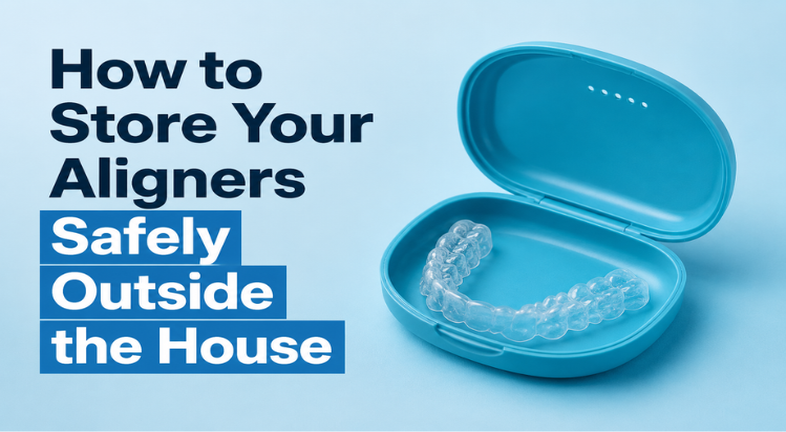 How to Store Your Aligners Safely Outside the House


Heading