.webp)
Cavities do not usually start with pain; they begin quietly. A thin film of plaque forms, bacteria settle in, and before you realize it, enamel has started to weaken. The risk of cavities often increases when you wear oral appliances like Essix retainers.
However, the retainer itself is not the issue; improper maintenance and neglecting cleaning are the main culprits. If you have invested in orthodontic treatment, whether traditional braces or clear aligners, your retainer is what protects that investment. But an unclean one just makes matters worse. So, let’s walk through this guide to understand why cleaning your Essix retainer is important.
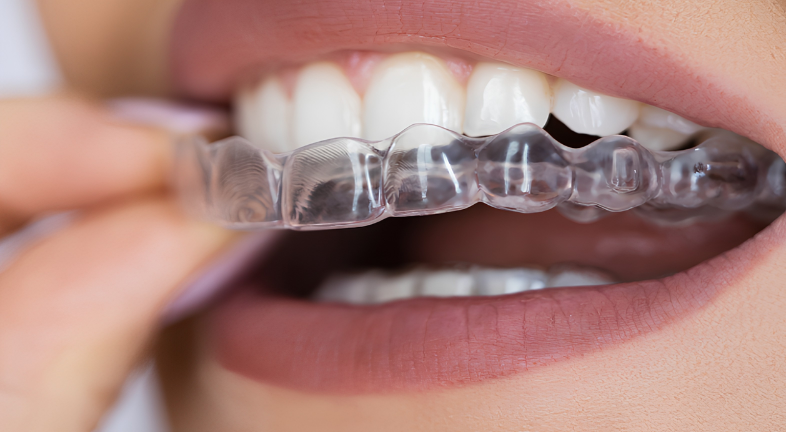
If you want to prevent cavities while wearing a retainer, the first and most effective step is to clean the Essix retainer daily using the correct method. When an Essix retainer sits snugly over your teeth, it creates a sealed environment. Any bacteria left on your enamel or trapped inside the retainer remain there for hours. Saliva flow is reduced, and oxygen is limited. That combination creates a perfect breeding ground for cavity-causing bacteria.
Now, to clean your Essix retainer, you do not need complicated products. You need consistency and a simple routine:
That being said, consistency matters more than anything. For example, gentle brushing twice a day is more protective than soaking it once a week.
Cavities are caused by acid-producing bacteria. That part is widely understood. However, what many people overlook is that a retainer changes the environment of your mouth.
An Essix retainer is molded to fit your teeth perfectly. That tight seal keeps teeth aligned, but it also keeps bacteria, debris, plaque, etc, directly against the enamel when it is not clean. Over time, plaque hardens into tartar, acid exposure increases, and decalcification begins. You might not see it immediately. White spots may appear first, followed by sensitivity, and by the time you notice something, a cavity has already been developing for months.
The bacteria do not differentiate between natural teeth and surfaces under plastic. If sugar residue or plaque remains trapped under your retainer, the damage accelerates. In some cases, cavities form faster under retainers than they would without one. The retainer itself does not cause cavities, but poor hygiene around it does.
Plaque thrives in tight spaces. An Essix retainer creates one of the tightest environments possible in the mouth. Even when teeth look clean, microscopic plaque layers remain. When a retainer is placed over unbrushed teeth, bacteria are sealed in. That seal holds moisture and nutrients in place. You might think skipping brushing once before bed is harmless. It is not.
Sleeping with an unclean retainer over unbrushed teeth significantly increases cavity risk. Saliva production decreases during sleep, and saliva is your natural defense against acid. The result is prolonged acid exposure. That is why dentists emphasize brushing and flossing before inserting your retainer at night. Cleaning the retainer without cleaning your teeth is only half the solution.
Now, let’s see how to clean Essix retainers properly.
Many people search online for how to clean Essix retainers, and unfortunately, they often receive conflicting advice. Let us simplify it with a simple daily cleaning routine.
Follow this day-to-day drill to ensure your Essix retainers remain squeaky clean.
Do not scrub your retainer harshly and never use hot water. Heat can warp the plastic, and once the shape changes even slightly, the fit becomes compromised. A warped retainer does not just feel uncomfortable. It can shift teeth incorrectly.
Once a week, deep clean your retainer. For instance, Caspersmile UV Ultrasonic Cleaner is the best appliance to clean your device. Avoid alcohol-based mouthwash and avoid bleach. Those chemicals degrade the material and make it more porous over time. Porous plastic traps more bacteria. Which brings us back to cavities.
If you are wondering how to clean your Essix retainer without damaging it, always choose gentle methods over aggressive ones. Providers like Caspersmile also offer Cleaning Tablets to help you clean your devices without any damage.
Even patients who believe they know how to clean essix retainer sometimes make subtle mistakes.
Heat warps plastic. Warping affects fit. A poor fit traps bacteria unevenly and may shift teeth.
Morning cleaning is just as important as nighttime cleaning. Bacteria multiply overnight. The retainer needs attention as soon as it is removed.
Whitening toothpaste scratches the surface. Scratches create microscopic grooves. Grooves hold bacteria.
If the case is dirty, your clean retainer is placed back into bacteria. The cycle repeats. Small oversights compound over time. Correcting them early prevents larger issues later.
Consistency matters more than intensity. You do not need complicated tools. You need repetition. Linking retainer cleaning to brushing your teeth makes it automatic. Routine removes decision fatigue. Some people keep a small reminder note inside their retainer case. Others set a daily alarm for the first few weeks. Habits form faster when cues are visible. Over time, cleaning becomes instinctive.
At Straight My Teeth, patients are encouraged to view their retainer as part of their long-term oral health strategy, not just a post-treatment accessory. If you ever need guidance or an Essix retainer replacement, support is available through their official site. Protecting alignment and protecting enamel are connected. One habit supports both.
An Essix retainer with a tooth included requires even more attention. That artificial tooth section can trap food particles along the gum line. Cleaning becomes slightly more detailed. You should gently brush around the attached tooth area and inspect it daily.
If plaque accumulates there, gum inflammation can develop quickly. Inflamed gums create pockets where bacteria settle deeper. Patients sometimes overlook this because the retainer looks clean at a glance. But bacteria are invisible. Cleaning must be thorough yet careful. Over-scrubbing can loosen the bonded tooth component.
There is no exact timeline. In some cases, early enamel demineralization can begin within weeks of poor hygiene. Visible cavities take longer. But the process starts quietly. Patients often assume that because they cannot see damage, none exists. Unfortunately, the tight fit of an Essix retainer can hide early warning signs.
That is why regular dental checkups remain important. Dentists can identify decalcification before it becomes a cavity. Prevention is easier than repair. That is not a dramatic statement. It is a practical one.
Orthodontic treatment takes time. Effort. Financial commitment. Allowing cavities to develop because a retainer was not cleaned properly undermines that entire investment. It is unnecessary and avoidable.
The steps are simple, as we’ve discussed before. When someone searches for how to clean an Essix retainer, what they are really asking is how to protect their smile. The answer is consistency. Clean retainers protect enamel. Clean enamel resists cavities. The chain is straightforward. If you are wearing an Essix retainer with a tooth, the principle remains the same, but with extra care.
Bacteria cannot cause damage if they are removed regularly. Your retainer should preserve your smile, not complicate it. And honestly, once cleaning becomes routine, it takes less than two minutes. Two minutes is a small commitment compared to treating cavities later.





Heading