.webp)
Night guards are commonly recommended for people who grind or clench their teeth, suffer from jaw pain, or show signs of enamel wear. If you’ve been advised to wear one, the next question is often financial rather than clinical: are night guards covered by insurance in the UK?
The answer isn’t always a clean yes or no. Whether you’re covered by the NHS or private insurance depends on a few things, like whether it’s seen as a medical need or a preventive step.
This guide walks you through how dental insurance works in the UK, when a night guard might be covered, when it usually isn’t, and what your options are if you end up paying out of pocket.
A night guard is a removable dental appliance you wear while you sleep. It fits over your teeth and acts like a cushion, stopping your teeth from grinding directly against each other at night.
Dentists usually suggest a night guard if you’re dealing with things like worn enamel, jaw soreness, or tension headaches when you wake up. They’re also commonly used to help manage TMJ symptoms and reduce the pressure clenching puts on your jaw joints.
In most cases, night guards are not fully covered by insurance in the UK, but partial coverage is sometimes available depending on the type of insurance and the reason for treatment.
Under NHS dental care, night guards are rarely covered. The NHS primarily funds treatments that are clinically necessary to maintain oral health. Because night guards are often viewed as preventive rather than restorative, they usually fall outside standard NHS coverage.
In limited cases where severe jaw dysfunction or pain is present, a dentist may prescribe a basic appliance under NHS treatment bands. However, this is not common, and waiting times can be long.
Private dental insurance is where coverage becomes more variable. Some plans offer partial reimbursement for night guards, while others exclude them entirely.
This is why many patients ask:
The answer depends on how the appliance is categorised within your policy.
Understanding insurance language is key to understanding coverage.
Many insurers classify night guards as preventive appliances, meaning they help stop damage but don’t repair existing problems. Preventive treatments are often subject to lower reimbursement limits or exclusions.
If your dentist documents that a night guard is required to manage pain, protect damaged enamel, or address jaw dysfunction, insurers may consider it medically necessary, which can improve your chances of reimbursement.
Night guards are not orthodontic treatments, but some insurers group them under “dental appliances” rather than general dentistry. This classification can limit coverage or cap reimbursement.
This is why many patients struggle to understand what a night guard falls under for insurance, even when they have a comprehensive policy.
Bruxism is one of the most common reasons dentists prescribe night guards. However, insurance coverage is inconsistent.
Some policies may:
Others may exclude bruxism appliances entirely, viewing them as wear-and-tear prevention rather than treatment.
If you’re asking are night guards covered by dental insurance, the most accurate answer is: sometimes, but rarely in full.
While coverage isn’t guaranteed, there are steps that can improve your chances.
First, ask your dentist to clearly document why the night guard is necessary, not just that it was recommended. Notes about jaw pain, tooth wear, fractures, or TMJ symptoms can help.
Second, request the correct dental code from your provider. Some insurers require a specific dental code for night guards before considering reimbursement.
Third, contact your insurer before purchasing the appliance. Ask directly:
This proactive approach avoids surprises later.
Many patients are frustrated when claims are denied. The reasons are usually structural, not personal.
Insurance providers often argue that:
This explains why people frequently ask why won’t insurance cover a night guard, even when the dental need feels obvious.
In the UK, the cost of a dentist-made night guard varies depending on the clinic, materials used, and whether it’s fully custom-made. Insurance can reduce the cost, but coverage is often limited and not guaranteed.
| Scenario | Typical Cost Range (UK) | What This Usually Includes |
| With dental insurance | £50 – £250+ out of pocket | Partial reimbursement after claim approval, usually capped annually and often limited to one appliance every few years. |
| Without insurance (Private Clinic) | £100 – £500+ upfront | Full cost paid privately, including impressions and fitting. |
| Replacement or adjustments | £50 – £500+ Depending on insurance eligibility | Often charged separately, especially if the guard is lost, damaged, or no longer fits. |
What this means in practice
Even with insurance, most patients still pay a portion of the cost themselves, and coverage rarely applies to replacements or upgrades. Without insurance, the upfront cost is higher, which is why many people explore alternative, more affordable custom options when insurance doesn’t apply.
No. Night guards are not orthodontic appliances. They don’t move teeth or correct alignment. However, insurance policies sometimes group them under appliance benefits, which can cause confusion. This classification issue is one reason coverage varies so widely.
If your insurance won’t help, you’re not stuck. This is actually more common than people realise.
Many patients end up paying privately for a night guard, which is why more people are now looking beyond traditional dental clinics for custom-fit options that cost less and feel easier to manage financially. Brands like Caspersmile offer dentist-designed night guards with flexible payment plans, making it possible to protect your teeth without paying a large lump sum upfront.
What matters most isn’t where the night guard comes from. It’s whether it’s:
When those boxes are ticked, you’re getting real protection, even without insurance involvement.
For most people, yes.
Grinding and clenching don’t just go away on their own. Left untreated, they can lead to cracked teeth, worn enamel, jaw pain, headaches, and costly dental repairs down the line. Compared to that, the cost of a night guard is often far lower than the price of fixing the damage later.
That’s why many dentists see night guards as preventive care, not an optional extra. Even without insurance coverage, a well-made night guard can save you from much bigger expenses and discomfort in the future.
So, are night guards covered by insurance in the UK? Sometimes partially, often with limits, and rarely through the NHS unless there’s a clear clinical need.
The key takeaway is this: insurance should support your decision, not control it. Whether your plan contributes or not, protecting your teeth from grinding and clenching is a proactive step that pays off long-term.
By understanding how coverage works, asking the right questions, and exploring flexible payment plans, you can choose a solution that protects both your smile and your budget, without unnecessary s tress.

Curated the best for your knowledge
 Are Ultrasonic Cleaners Worth It for Clear Aligners?
Yes, ultrasonic cleaners for clear aligners can be worth it, especially for removing plaque, debris, and buildup that regular brushing may miss. They use high-frequency sound waves to create tiny bubbles that help loosen buildup from the trays and other orthodontic appliances, including retainers, mouthguards, and night guards. However, they are not essential for everyone and have some limitations. Here’s how ultrasonic cleaners work, their benefits and drawbacks, and how to use one safely.
Read More The Aligner Diet: Can Clear Aligners Really Cause Weight Loss?
Some people notice they've lost a little weight after starting clear aligner treatment. It can happen, especially during the first few weeks, when taking the trays out for every meal and snack takes some getting used to. Sore teeth can also make eating less appealing for a day or two. The amount of weight lost varies from person to person, and not everyone experiences this change. Below, we'll break down why it happens, whether it's actually good for you, and what to know before treating your aligners like a diet plan.
Read More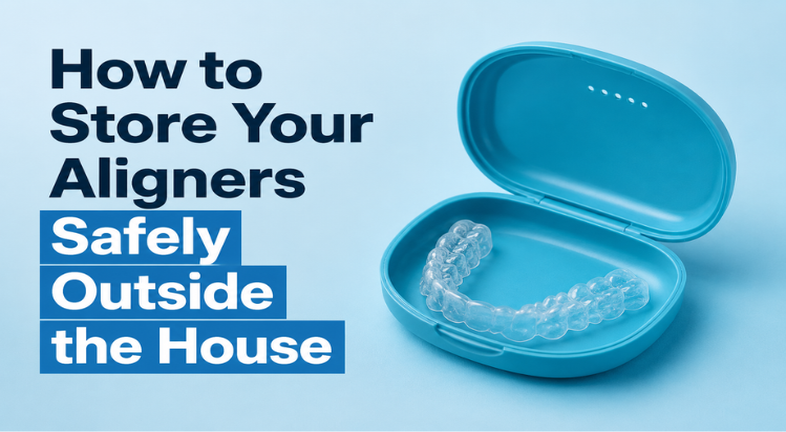 How to Store Your Aligners Safely Outside the House
Taking your clear aligners out while you're away from home is part of everyday life. The important part is knowing where to keep them until it's time to wear them again. Whether you're eating at a restaurant, traveling, running errands, or attending a social event, instead of leaving them on the table or wrapping them in a tissue or napkin, place them in a protective aligner case. Poor storage can lead to lost, damaged, or dirty aligners.
Read More



Heading