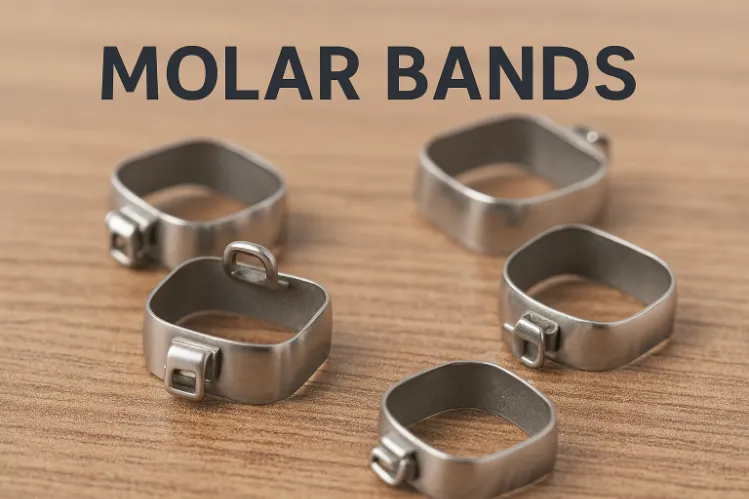
If you’ve ever started orthodontic treatment, you already know there are a lot of tiny pieces involved. Wires, brackets, elastics, retainers, attachments… and then there are molar bands. They’re not as famous as braces themselves, but they play a surprisingly big role in keeping your smile moving in the right direction.
Some people don’t really notice them. While others desperately want to know why that metal ring is even there. So let’s break it all down: what molar bands are, why orthodontists use them, and how they work in both braces and retainers. Plus, what you should expect throughout the process.
A molar band is a small metal ring that fits around one of your back molars. Think of it as a sturdy anchor that helps your braces do their job. While the front brackets stick directly to your teeth, your molars handle most of the heavy pulling. They take the force from the wires, elastics, and springs, so they need something extra secure.
That’s where the molar band comes in. It usually has:
And since your molars have large chewing surfaces and are harder to bond to, a band holds up better long-term.
Molar bands do a lot of behind-the-scenes work. Here’s what they help with:
Braces work by applying controlled pressure. But to push one tooth, something else has to stay steady. The molar band does exactly that. It gives your braces a firm base so the rest of your teeth can glide into place.
The metal slot or tube attached to the band acts as the pathway for your archwire. This is the wire that straightens your teeth and does most of the alignment.
If you’ve ever worn rubber bands, headgear, or springs, you’ve probably attached them to molar band hooks or molar band cleats. These little projections look tiny, but they guide major bite corrections.
Palatal expanders, Herbst appliances, and some retainers also rely on molar bands to stay secured in place. The band gives them a solid base so they don’t shift. So even though you barely see them, molar bands are working hard in the background.
If you’re comparing types of orthodontic care, check out our guide on Braces vs. Retainers to understand when each option makes sense.
The idea of having a ring pushed around your tooth might sound intense, but the process is pretty simple.
Your orthodontist tries different band sizes around your molar to find the perfect fit. It shouldn’t be too loose or too tight, just snug enough to stay put.
Your molar is polished and dried to help the band bond properly.
The band is coated with dental cement and pressed into place. You’ll feel pressure, but no pain.
A light cures the cement, locking the band in position. After that, your archwire or appliance attaches directly to the band.
You might notice tiny hooks, tabs, or nubs on your molar band. These are called molar band cleats.
They’re used for:
Their job is simple: give you an anchor point for orthodontic attachments. They may look small, but they’re essential for moving teeth vertically, correcting overbites, and guiding jaw alignment.
Sometimes the cleats on a molar band can irritate your cheek or tongue. A bit of orthodontic wax usually does the trick, and if it still bothers you, your orthodontist can easily adjust or smooth the area.
Short answer? Usually just a little, and only at first.
Many people say things like “my molar band hurts my tongue” or “the edges feel sharp”. That’s normal the first couple of days. Your mouth simply isn’t used to the new metal ring.
You may notice:
The good news? Your mouth toughens up fast. Most irritation fades within a week.
If pain sticks around or feels sharp, your dentist can adjust the band. Don’t try fixing it with molar band remover pliers at home (yes, people try).
Many retainers, especially metal ones or expanders, need something strong to grip onto. Instead of gluing them to the front teeth, orthodontists often anchor them using molar bands.
Why?
Retainers that use molar bands include:
In short: the band acts like a foundation your retainer can lock into.
Most people wear them as long as they’re in braces , anywhere from 12 to 24 months. If your retainer uses them, you might have them slightly longer.
The duration depends on:
If a band ever loosens or breaks, let your orthodontist know immediately. A loose band can cause decay if food gets trapped underneath.
Removing molar bands is quick and painless. Here’s what happens:
You may feel slight pressure, but no discomfort. Most people say removal is easier than they expected.
Cleaning around braces is already a job… molar bands just require a little extra care. Here’s how to keep the area clean:
This small brush gets between the band and gumline.
Slip floss under the wire and around the band to remove plaque.
The water pressure blasts away food stuck around the band.
Plaque builds up fastest near the gums, not the metal.
Good hygiene prevents:
If you keep the area clean, you’ll avoid most issues.
Yes, but less often than before. Some orthodontists now use advanced bonding materials and skip molar bands entirely. But they’re still used when treatment requires extra strength, such as:
So while not everyone will need molar bands, they’re still a very normal part of braces.
Get in touch if you notice:
Molar bands might not get as much attention as brackets or wires, but they’re one of those small orthodontic details that quietly hold everything together. They anchor your treatment, help guide complex movements, and keep appliances steady so your smile can move the way it’s supposed to.
If they feel strange at first or irritate your tongue or cheek, that’s completely normal—your mouth adapts quickly. And if something ever feels off, loose, or uncomfortable, your orthodontist can adjust things in minutes.
In the end, molar bands are just another part of the process that helps your braces or retainers work exactly the way they should. A little patience, good hygiene, and a bit of wax when needed go a long way toward keeping your treatment smooth and your smile on track.

Curated the best for your knowledge
 Are Ultrasonic Cleaners Worth It for Clear Aligners?
Yes, ultrasonic cleaners for clear aligners can be worth it, especially for removing plaque, debris, and buildup that regular brushing may miss. They use high-frequency sound waves to create tiny bubbles that help loosen buildup from the trays and other orthodontic appliances, including retainers, mouthguards, and night guards. However, they are not essential for everyone and have some limitations. Here’s how ultrasonic cleaners work, their benefits and drawbacks, and how to use one safely.
Read More The Aligner Diet: Can Clear Aligners Really Cause Weight Loss?
Some people notice they've lost a little weight after starting clear aligner treatment. It can happen, especially during the first few weeks, when taking the trays out for every meal and snack takes some getting used to. Sore teeth can also make eating less appealing for a day or two. The amount of weight lost varies from person to person, and not everyone experiences this change. Below, we'll break down why it happens, whether it's actually good for you, and what to know before treating your aligners like a diet plan.
Read More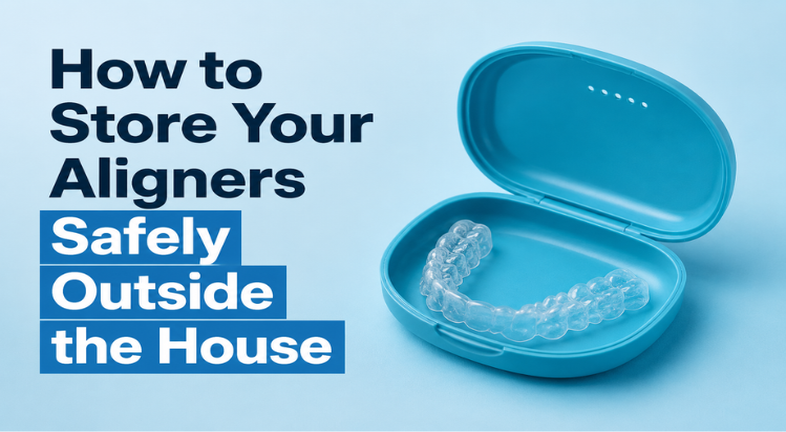 How to Store Your Aligners Safely Outside the House
Taking your clear aligners out while you're away from home is part of everyday life. The important part is knowing where to keep them until it's time to wear them again. Whether you're eating at a restaurant, traveling, running errands, or attending a social event, instead of leaving them on the table or wrapping them in a tissue or napkin, place them in a protective aligner case. Poor storage can lead to lost, damaged, or dirty aligners.
Read More


Heading