


Key Takeaways
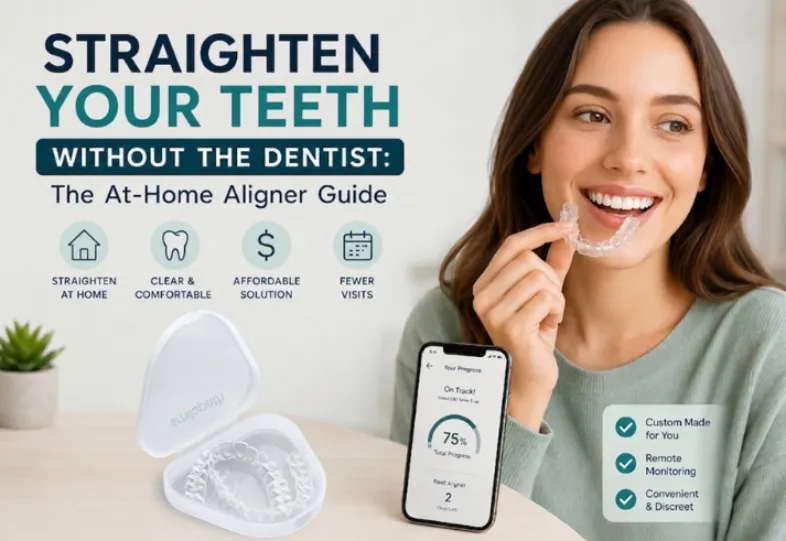
- At-home aligners provide a convenient alternative to traditional orthodontics, allowing eligible patients to straighten teeth without frequent dental visits.
- Caspersmile Clear Aligners combine professional oversight with remote treatment, making the teeth-straightening process more accessible and flexible.
- Popular reasons for choosing at-home aligners include affordability, convenience, discreet appearance, and reduced clinic appointments.
- Traditional braces remain the preferred option for complex orthodontic cases, while cosmetic procedures only improve appearance rather than correcting alignment.
- The at-home aligner process includes an initial assessment, impression kit, treatment plan approval, aligner wear, remote monitoring, and long-term retention.
- Consistency is critical to treatment success, with aligners typically needing to be worn 20–22 hours per day.
Not everyone has the time, budget, or desire to spend months cycling in and out of an orthodontist's chair. That's exactly why at-home aligners have grown into one of the most searched orthodontic options in recent years. Clear aligners offer a direct path to a straighter smile without the waiting rooms, adjustment appointments, and clinic markups that come with traditional treatment.
If you've been weighing your options for straightening teeth at home, this guide breaks down everything you need to know: how the process works, what results are realistic, and how aligners make the experience straightforward from day one.
Why More People Are Choosing At-Home Aligners
Traditional orthodontic treatment often involves multiple office visits, adjustment appointments, and higher overall costs. For busy professionals, students, and parents, this process can be difficult to manage.
At-home aligners offer a modern alternative by allowing eligible patients to complete most of their treatment remotely. Instead of visiting a clinic regularly, users typically submit impressions or scans, receive a customized treatment plan, and have aligners shipped directly to their door.
Key reasons people choose at-home aligners include:
- Greater convenience
- Lower treatment costs
- Nearly invisible appearance
- Flexible treatment schedules
- Remote monitoring options
- Reduced need for office visits
These advantages have made clear aligners one of the fastest-growing orthodontic solutions available today.
Best Way to Straighten Your Teeth without Frequent Dental Visits
People searching for ways to improve their smile often explore multiple options before choosing treatment. Below is the best way to straighten teeth :
At-Home Clear Aligners
For individuals with mild to moderate spacing, crowding, or alignment concerns, invisible aligners for home use can provide an effective balance between affordability, convenience, and aesthetics.
How At-Home Aligner Treatment Actually Works
.webp)
Many people assume remote orthodontic treatment is complicated. In reality, the process is designed to be straightforward. Here is the science behind the perfect smile :
Step 1: Initial Assessment
Most providers begin with an online evaluation to determine whether the patient may be a suitable candidate.
Step 2: The Impression Kit (Your Starting Point)
Everything begins with a DIY teeth straightening kit sent directly to your door. Caspersmile ships a professionally designed impression kit that takes roughly twenty minutes to complete at home. You mail the impressions back, and the clinical team creates a 3D model of your teeth to design your aligner series.
Step 3: Treatment Plan Review and Approval
Once your impressions are processed, you receive a proposed treatment plan, often with a digital preview showing the projected movement of your teeth from start to finish. A licensed dental professional oversees this stage to ensure the planned movements are safe and achievable for your specific case.
Step 4: Wearing Your Aligners
Your full set of aligners arrives, and you begin wearing them in sequence, typically swapping to the next tray every one to two weeks. Aligners should be worn for 20 to 22 hours per day. Consistency here is the single biggest factor in achieving the projected outcome within the estimated at-home aligner treatment time.
Step 5: Remote Progress Monitoring
This is where modern at-home treatment differs meaningfully from ordering a product and hoping for the best. Caspersmile requires periodic check-ins through a dedicated app, where you submit photos of your teeth at regular intervals. A dental professional reviews each submission; this supervised model is what separates reputable invisible aligners for home use from unsupervised products.
Step 6: Retention
Once treatment is complete, a retainer keeps your teeth in their new position. Without retention, teeth naturally drift back toward their original placement. Caspersmile includes retainer options as part of the post-treatment plan so results are maintained long-term.
What Dental Issues Can At-Home Aligners Realistically Fix?
Not every orthodontic issue is a candidate for at-home aligner treatment. Conditions that respond well to invisible aligners for home use include:
- Mild to moderate crowding (overlapping teeth)
- Spacing issues and gaps between teeth
- Minor overbite or underbite adjustments
- Relapse cases where teeth have shifted after previous orthodontic treatment
Severe skeletal misalignment, significant bite correction, or cases involving impacted teeth typically require in-person orthodontic care. Part of Caspersmile's intake process is assessing your impressions to confirm you're an appropriate candidate before any treatment plan is approved.
Clear Aligners vs. Traditional Braces Cost: A Practical Comparison
Cost is often the most immediate consideration for anyone exploring teeth straightening without braces. Here's how the main options compare:
| Option | Typical cost | Clinic visits |
| Metal braces | £2,000–£4,500+ | 20–30+ visits |
| At-home clear aligners | Starting from £675 | Minimal/remote |
The clear aligners vs. traditional braces cost gap is significant, and not just in dollars. In-office treatment also carries the hidden cost of time: average treatment requires 20–30+ clinic appointments over 12–24 months. At-home aligner treatment eliminates those visits almost entirely. Caspersmile structures its pricing to reflect this: you pay for your aligners and your remote care, not for a clinic's overhead. Flexible payment plans make the upfront cost manageable without compromising on clinical quality.
Are At-Home Aligners Right for Everyone?
Straightening teeth without frequent dentist visits suits a specific profile: adults or older teens with mild to moderate alignment issues, stable dental health (no active cavities or gum disease), and the discipline to wear aligners consistently. Compliance is non-negotiable; aligners that spend more time off your teeth than on them will not produce the planned result.
At-home aligners are not recommended for children whose jaws are still developing, individuals with complex bite issues, or anyone with unresolved dental health concerns. If you pass a thorough eligibility screening, as the one Caspersmile conducts before approving any treatment, the at-home model offers a clinically sound path to straightening teeth at home that works around your schedule.
Achieving a Straighter Smile with At-Home Aligners
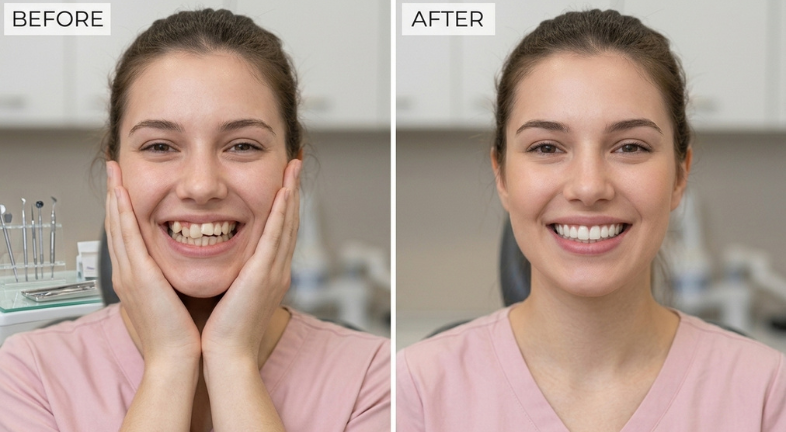
The demand for convenient orthodontic solutions continues to grow, and at-home aligners have emerged as an effective option for many people seeking a straighter smile. They offer flexibility, affordability, and a discreet appearance while reducing the need for frequent office visits.
Although not suitable for every orthodontic case, they can successfully address many mild to moderate alignment concerns when used correctly. By understanding the treatment process, expected timeline, costs, and limitations, patients can make informed decisions about their smile journey.





Heading