.webp)
You have probably been thinking about this for longer than you would like to admit. Maybe you keep noticing it in photos, or maybe your dentist has been circling the topic at every appointment. Either way, you have reached the point where you are actually looking into it, and now you are staring at two options that seem straightforward until you start reading about them.
Clear aligners or traditional braces. Both promise the same result. Both have loyal advocates. And both come with enough variables that a simple side-by-side comparison barely scratches the surface.
This guide works through the full picture: how each option works, what clinical research actually shows, what they tend to cost in practice, and how to figure out which one makes sense for your specific situation.
Before comparing outcomes, it helps to understand how each treatment works at a fundamental level.
Clear aligners are a series of custom-fitted, removable plastic trays. Each tray is designed to move your teeth a fraction of a millimetre, and you progress through the series every one to two weeks until your teeth reach the intended final position. Invisalign is the most recognised brand, but several other providers now offer similar systems at varying price points.
Because the trays are removable, you take them out to eat and drink anything other than water, and to clean your teeth. The clinical requirement is 20 to 22 hours of wear per day. That sounds simple enough until life intervenes and you realise three hours have passed without you noticing the trays are out.
Traditional braces work through metal brackets that are bonded directly to each tooth and connected by a wire. Your orthodontist adjusts that wire every four to six weeks, and the sustained tension gradually shifts your teeth into alignment. Because they are fixed, they work continuously with no compliance variable on your end.
Ceramic braces follow the same mechanical principle but use tooth-coloured or clear brackets, making them considerably less visible. They typically cost a bit more than standard metal braces and are slightly more prone to staining, but many adults prefer them for that reason.
A lot of marketing exists in this space, so it is worth grounding the comparison in what published studies have actually found.
A 2023 systematic review published in Biomedical Research pulled together five randomised clinical trials comparing clear aligners with fixed appliances. For non-extraction cases with mild to moderate crowding, clear aligners performed well: shorter treatment duration, less time in the chair per appointment, and fewer unscheduled visits. The review was careful to frame that finding within the right case type, not as a universal verdict.
A 100-patient comparative study split evenly between the two treatments found that after 12 months, clear aligner patients achieved a 75% improvement on the PAR index (a standard alignment measure), while braces patients achieved 80%. For mild to moderate cases, that five-point gap is unlikely to be meaningful in practice. The aligner group also completed treatment 1.7 months sooner on average.
For complex cases, the picture shifts. A patient-reported outcomes review on PMC noted that conventional braces remain the stronger clinical choice when significant tooth movement is required across multiple planes, particularly for severe crowding or bite correction.
This is an area where the research is fairly consistent. A 2024 study in the International Journal of Dental Hygiene measured gum health in both groups and found that fixed brace patients developed moderate gingivitis, while clear aligner patients showed only mild gingivitis. The difference comes down to hygiene access: when you can remove your orthodontic appliance to brush and floss normally, it is much easier to keep your gums healthy during a treatment that can last over a year.
When you move from a broad comparison to the reality of daily life, the differences become far more practical and personal.
Your diet does not change. You eat what you want, remove the trays to eat, brush before putting them back in, and carry on. Oral hygiene is as straightforward as it normally is. Most people around you will not notice you are wearing them, which matters more to some patients than others.
The challenge is entirely about discipline. Hitting 22 hours of wear per day, every day, across months of treatment requires consistent habits. Some people find the routine easy to build. Others find themselves regularly losing an hour here and there, and that accumulates. Treatment outcomes are directly tied to compliance in a way they simply are not with fixed braces.
Fixed braces come with a list of foods to avoid: anything that could snap a bracket or pack tightly into the wire. Popcorn, chewing gum, hard sweets, and very crusty bread tend to be off the table. Brushing takes longer and requires more technique to get around all the hardware properly.
Adjustment appointments can leave your teeth tender for a day or two afterward. The wires and brackets can cause some friction against the inside of your cheeks, especially in the first few weeks before you adjust.
On the other hand, braces do not require anything from you beyond showing up to appointments. The treatment moves forward regardless, which is a genuine advantage for patients (particularly younger teenagers) who cannot realistically be trusted to maintain consistent compliance over a long period.
To understand the real investment, it helps to break down what each option typically costs in practice. An invisible aligner cost comparison makes it easier to see how different treatments stack up, from in-clinic systems to at-home solutions, so you can choose what fits your budget and lifestyle best.
Private metal braces in the UK generally run between £1.800 and £3,000. Ceramic braces tend to cost between £2,000 and £5,000. Children under 18 who meet the clinical criteria can access NHS orthodontic treatment at no charge, though NHS waiting times vary significantly by region.
In-office clear aligner treatments like those offered by Invisalign start at around £1,800 and can reach £5,000 or more, depending on the complexity of the case. You will also encounter at-home aligner companies priced considerably lower. These options can be a great fit when chosen thoughtfully. Brands like Caspersmile make affordable teeth straightening options more accessible by offering at-home impression kits and clear aligners at a fraction of traditional costs.
They’re designed for convenience, flexibility, and budget-friendly treatment, making it easier for people to start their journey without the high upfront expense.
Retainers are required after both types of treatment and represent an ongoing cost either way. With clear aligners, maintaining results depends on consistent retainer wear, making post-treatment habits especially important.
Emergency appointments are more common with fixed braces. A broken bracket or a protruding wire means an unplanned visit. Aligner problems (a cracked or lost tray) tend to be less disruptive to manage.
For mild to moderate cases, the two options are broadly comparable in price. For complex cases, braces usually represent a better value because they can achieve more without requiring an extended series of additional trays. For adults with mild cases who care about discretion, clear aligners tend to justify the slightly higher cost.
When asking are clear aligners better than braces, the answer really depends on your specific needs, lifestyle, and the complexity of your case. Clear aligners work well for adults and older teenagers with mild to moderate alignment issues who are genuinely motivated to maintain their wear schedule. They are a particularly good fit for people in professional or social environments where visible orthodontic treatment feels like a problem, or for anyone who plays a contact sport or a wind instrument.
Traditional braces are usually the better clinical choice for patients with complex cases, for younger children and teenagers where compliance reliability matters, and for anyone working within a tighter budget who needs meaningful tooth movement. They are also simply the right answer if your orthodontist recommends them based on your clinical needs, and that recommendation carries real weight.
If you have read this far, looking for a clear winner, the honest answer is that there is not one. The clear aligners vs braces debate has been running for years precisely because both options are genuinely good within the right clinical context.
What the research shows is straightforward enough: for mild to moderate cases, clear aligners produce comparable results to braces and tend to come with better gum health outcomes, slightly shorter treatment times, and less day-to-day disruption. For complex cases, traditional braces offer more clinical control and often better value. The costs are broadly similar for straightforward treatment, with braces pulling ahead when significant movement is required.
The version of this that actually matters is the version your orthodontist works through with your teeth in front of them. An in-person clinical assessment, with proper records taken, will tell you more in 30 minutes than any comparison article can. That appointment is the right next step, not another hour of research online.

Curated the best for your knowledge
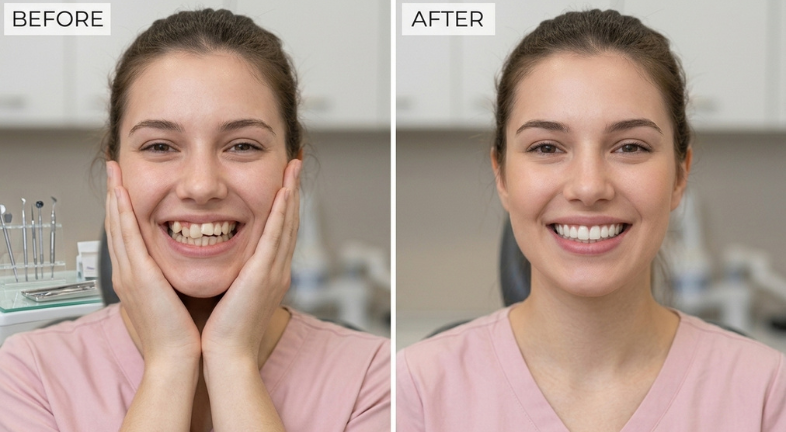 Do Clear Aligners Change Your Face Shape?
Yes, aligners can change your face shape slightly, mainly by changing the position and alignment of your teeth and, in some cases, your bite. But they don’t change your actual bone structure.
Read More What to Do If You Lose Your Aligners While Traveling
The first thing is to contact your provider and figure out if you can switch back to a previous tray or move to the next one. Losing your aligners while traveling can be stressful, but it does not necessarily mean your treatment will be disrupted. The most important thing is to act quickly. Look for your missing tray, wear your previous aligner if advised, and contact your provider for instructions on what to do next. In this guide, we’ll explain what to do if you lose your aligners while traveling, how a lost aligner can affect your treatment timeline, and what you can do to prevent it from happening again.
Read More Building Better Habits During Clear Aligner Treatment
Building better habits during clear aligner treatment can help you stay consistent with aligner wear, oral hygiene, and your treatment plan. Simple routines, such as wearing your aligners as directed, cleaning them regularly, and keeping track of your wear time, can make treatment easier to manage and help you stay on schedule. In this guide, we’ll cover the most important habits during clear aligner treatment and practical ways to make them part of your daily routine.
Read More



Heading