.webp)
Malocclusions are a common concern among individuals of all ages. It includes dental issues like overcrowding, overbite, openbite, and spacing. Teeth with gaps in them are very common in children, but are not something that you need to worry about. The gaps tend to disappear as you reach adulthood. Some people are happy to live with the gap in their teeth. However, some might feel conscious and want to get rid of it. In this guide, let us give you a complete understanding of diastema, its causes, and possible treatment options.
Any gap between two teeth is known as a diastema. It’s most often noticed between the front two teeth. The condition usually develops when there is a disproportion between the jaw and teeth. It can be caused by alignment issues or even because of too much tissue in the mouth for the teeth to come through properly.
Not every diastema is the same. Dentists typically group them into different categories based on what causes the gap and where it’s located in the mouth.
This is the most common and easily recognized type. It appears as a noticeable space right between the two upper front teeth, often visible when a person smiles.
In this type, several teeth are spaced apart across the mouth. It’s often linked to a mismatch between the size of the jaw and the size of the teeth, leaving extra space between them.
Here, a single gap develops because of a specific cause, such as a missing tooth, abnormal tooth shape, or habits like thumb-sucking that put pressure on certain teeth.
You must understand the cause of your tooth gap, as this will help your dentist diagnose the problem much faster. It will also give them the chance to provide you with the perfect solution.
Size is a very important risk factor when you look at why tooth gaps exist. If your teeth are undersized, then this will give you an extra space in your mouth, where teeth can move around. Another reason is that one or more teeth are missing or small, causing the other teeth to shift. It’s important to know that gum diseases, such as gingivitis, can also cause tooth loss.
Unhealthy dental habits that have formed over time can be very distressing, to say the least. If you have stressed the front teeth by bringing them forward through thumb sucking, then this can cause your teeth to become misaligned.
The tissue that joins the upper lip to the gums is known as the labial frenum. In situations where it grows too much, it passes through the two front teeth, and this can result in a large gap.
A lot of people try and opt out of having a cosmetic procedure done to fix their diastema. If you don’t feel like having braces for the next few years or if you are happy with the way that your mouth is right now, then there’s nothing wrong with this.
That being said, if you want to try and get that perfect smile or if you want to have that Hollywood look, then you may feel self-conscious about your diastema. If you want to put an end to this or if you want to make sure that you do everything you can to try and perfect your smile, then you should know that there are, in fact, various options out there that can help you to achieve the look you want without much effort at all.
Braces are a common treatment if you have diastema. Braces have wires and brackets, and this essentially means that pressure is put on your teeth, moving them slowly together. This closes the gap. Other than traditional metal braces, you can look forward to ceramic braces. After a thorough assessment, your dentist can best suggest the type of braces for you.
Clear aligners have emerged as a popular alternative to traditional braces for correcting dental misalignments. They are effective for mild to moderate dental cases. If you are struggling with the gap between teeth and do not want metal braces to impact your appearance, clear aligners can be the right option for you.
Bonding or veneers may be an option for treating diastema. When you go for bonding, you will get a compound that is the same colour as your teeth fill in the gaps. Or you’ll get veneers to fit over your teeth, instantly improving the overall appearance of your smile. This procedure is very useful if you have a missing or cracked tooth.
If the gap is caused by a missing tooth, a dentist can use a dental implant or a dental bridge to close the space. These treatments not only improve the appearance of your smile but also help restore proper chewing function and prevent surrounding teeth from shifting out of place.
If you want to get rid of the unwanted gaps between the teeth without impacting your appearance. Clear Aligners like those from Caspersmile , SmileWhite, and Diamond White can be the right choice for you. With aligners, you can ensure a smooth and effective smile transformation. Aligners are composed of BPA-free plastic and are customized to each individual’s dental structure.

Curated the best for your knowledge
 Are Ultrasonic Cleaners Worth It for Clear Aligners?
Yes, ultrasonic cleaners for clear aligners can be worth it, especially for removing plaque, debris, and buildup that regular brushing may miss. They use high-frequency sound waves to create tiny bubbles that help loosen buildup from the trays and other orthodontic appliances, including retainers, mouthguards, and night guards. However, they are not essential for everyone and have some limitations. Here’s how ultrasonic cleaners work, their benefits and drawbacks, and how to use one safely.
Read More The Aligner Diet: Can Clear Aligners Really Cause Weight Loss?
Some people notice they've lost a little weight after starting clear aligner treatment. It can happen, especially during the first few weeks, when taking the trays out for every meal and snack takes some getting used to. Sore teeth can also make eating less appealing for a day or two. The amount of weight lost varies from person to person, and not everyone experiences this change. Below, we'll break down why it happens, whether it's actually good for you, and what to know before treating your aligners like a diet plan.
Read More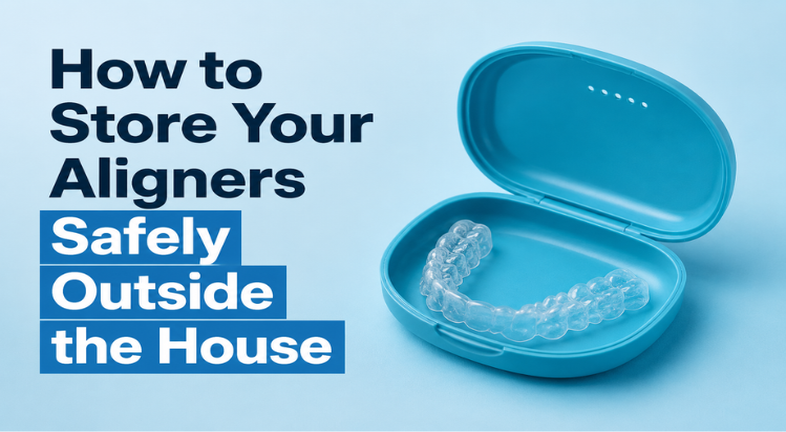 How to Store Your Aligners Safely Outside the House
Taking your clear aligners out while you're away from home is part of everyday life. The important part is knowing where to keep them until it's time to wear them again. Whether you're eating at a restaurant, traveling, running errands, or attending a social event, instead of leaving them on the table or wrapping them in a tissue or napkin, place them in a protective aligner case. Poor storage can lead to lost, damaged, or dirty aligners.
Read More



Heading