- What are Clear Aligners?
- What’s the procedure?
- Who is the ideal candidate for at-home teeth straightening?
- Who is not a candidate for clear aligners?
- Are you worried about crooked teeth?
Are you considering the option of straightening teeth at home using clear aligners? A straight smile in 6 months (or maybe a little longer) sounds appealing, right?
So how does at-home teeth straightening work and what’s the process? We’re sure you have many questions that need answering to put your mind at ease, so take a seat and enjoy the read.
But first of all, let’s take a quick look at clear aligners, what they are, and why they’re so popular….
What are Clear Aligners?
Clear aligners are a series of close-fitting custom-made orthodontic systems that are used for teeth straightening. As a removable alternative to braces, their ‘invisible’ appearance, convenience and flexibility have made them a popular choice for those wishing to straighten their teeth discreetly.
Other factors like heightened awareness of adult orthodontics, celebrities sporting straight white smiles, and social media influencers have all played their part in driving the clear aligner market forward.
While clear aligners may seem like a new concept, you may be surprised to learn that they have been around since 1998. However, they have evolved with time – the most recent being direct-to-your-door clear aligners that enable patients to straighten their teeth at home without the need to visit a dentist or orthodontist.
This brings us nicely back to the question of whether teeth straightening at home using tele-dentistry works.
The answer is yes, but it’s not for everyone.
At-home teeth straightening is ideal for gapped or crooked teeth. In 4 to 10 months patients can achieve a straighter smile in a very discreet way. Most at-home clear aligner solutions are designed for those individuals who are more concerned with achieving their optimal straightening results as opposed to wanting to correct a more complex malocclusion which could, in some cases, require a 2-year stint of orthodontic treatment.
What’s the procedure?
Worn over the teeth like a mouthguard, they provide a snug but comfortable fit with no brackets and wires. Gentle pressure is gradually applied so that over a few months the teeth gradually start to move into their correctly aligned positions.
Here’s how the procedure works
- Simply fill out an online assessment form and an experienced dentist will review your case to see if you’re a suitable candidate for clear aligners.
- Once approved you can order an impression kit.
- Having sent off your completed impression moulds to a dental lab, you will receive a 3D simulation of your predicted smile results so you can view your new smile before starting treatment.
- Once you’re happy, we’ll post your custom-made aligners directly to your door and you’re good to go.
Who is the ideal candidate for at-home teeth straightening?
Clear aligners typically address the visible teeth in your smile line so they’re ideal for people looking to correct mild to moderate misalignments in this area without incurring the cost and time needed with other braces options.
This is what makes an ideal candidate for clear aligners:
- You are 14 years of age or older
- The teeth you want to align are natural
- You have mild to moderate tooth crowding/spacing
- You agree to wear your aligners as instructed by your designated dentist
- You have a shipping address
- You have attended a dental check in the last 6 months and your teeth are healthy
- You want your best smile
- You would like to save money on orthodontic treatment from home
Who is not a candidate for clear aligners?
- Your dental issue is too complex for teeth straightening at home and requires one-to-one care in a dental clinic.
- Not all of your teeth are natural. Crowns, veneers, bridges, and implants may interfere with the procedure since these are treatments designed to fit with the current alignment of the teeth.
- You are not dentally healthy. It’s not wise to start any orthodontic treatment if you have gum disease, tooth decay, or a severe bite issue.
Are you worried about crooked teeth?
Perhaps it’s time to start cosmetic teeth straightening at home. Try Caspersmile, a budget-friendly and efficient clear aligners brand that is passionate about helping people feel more confident by offering them an easily affordable method of achieving the beautiful straight smile they’ve always wanted. Take a free assessment to see if you’re a suitable candidate. It’s never too late to straighten teeth and with a super low price of just £625, there’s even more reason to smile.

 Are Ultrasonic Cleaners Worth It for Clear Aligners?
 The Aligner Diet: Can Clear Aligners Really Cause Weight Loss?
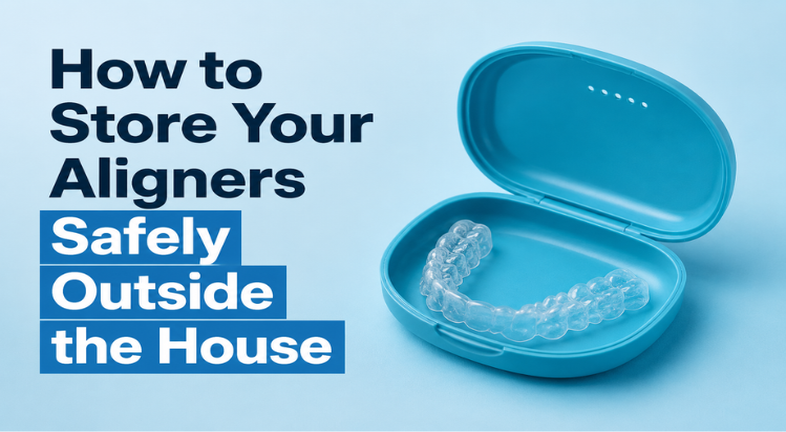 How to Store Your Aligners Safely Outside the House


Heading