


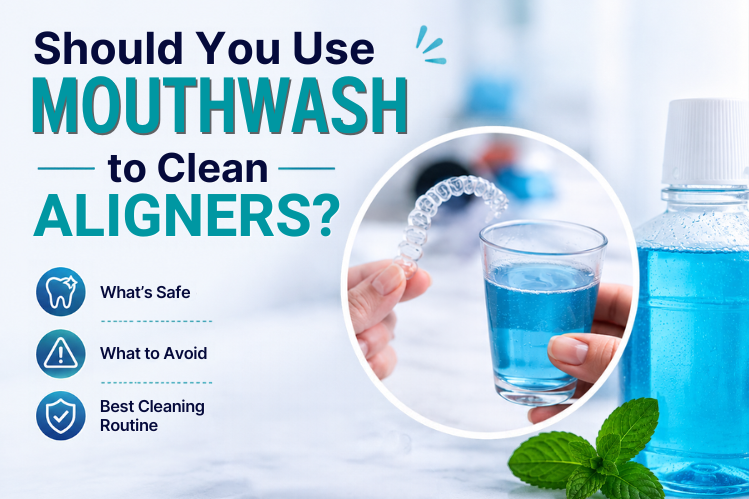
Key Takeaways
- Mouthwash is not a recommended cleaning solution for clear aligners.
- Remove your aligners before using mouthwash to avoid unnecessary exposure to its ingredients and dyes.
- Coloured mouthwash can stain or discolour clear aligners, affecting their appearance.
- Clean aligners separately with cool or lukewarm water and an aligner-safe cleaning method.
- Avoid hot water, abrasive toothpaste, bleach, harsh chemicals, and prolonged mouthwash soaking.
- Clean your aligners daily and rinse them whenever you remove them.
- Keep your teeth and aligner case clean to support good aligner hygiene.
- Always follow your aligner provider's specific cleaning instructions.
Can you clean aligners with mouthwash? Mouthwash is not the preferred way to clean clear aligners. It is formulated for rinsing your mouth, while aligner-safe cleaning products are designed to clean the trays. Coloured mouthwash can also stain or discolour clear plastic. Remove your aligners before using mouthwash, then clean your trays separately with cool or lukewarm water and an approved cleaning method.
Can Mouthwash Damage Clear Aligners?
Some mouthwash formulas can stain clear aligners or leave residue. Some formulas also contain ingredients that may contribute to clouding or material damage with prolonged exposure, so mouthwash is not recommended as an aligner-cleaning solution. Coloured mouthwash presents a particular cosmetic concern because its dyes can affect the appearance of transparent trays.
Keep these points in mind:
- Check the colour: A clear or dye-free mouthwash avoids unnecessary colour exposure to transparent trays.
- Check the formula: Do not use unapproved products as aligner cleaners.
- Remove your trays: Use mouthwash with your aligners out.
- Avoid soaking: Do not use mouthwash as a long-term soaking solution.
For everyday use during aligner treatment, a fluoride mouthwash is a practical choice for oral hygiene. Chlorhexidine mouthwash is generally reserved for short-term use when recommended by a dental professional, while an alcohol-free formula can be preferable if you experience dryness or irritation. Choose a clear formula, avoid coloured or strongly formulated mouthwashes, and always remove your aligners before rinsing.
How to Use Mouthwash During Aligner Treatment
Mouthwash belongs in your oral hygiene routine, while your aligners require a separate cleaning method. Follow these steps:
- Remove your aligners before using mouthwash.
- Rinse your mouth as directed by the product instructions.
- Rinse your aligners with cool or lukewarm water.
- Clean your trays with an aligner-safe product or method.
- Rinse the trays thoroughly before wearing them again.
- Brush your teeth before reinserting your aligners after eating.
Avoid hot water because high temperatures can affect the shape and fit of clear aligners. If your aligner provider gives specific cleaning instructions, follow them.
What Is the Safest Way to Clean Clear Aligners?
Use a product or cleaning method specifically intended for clear aligners. Dedicated cleaning products provide directions for contact time, rinsing, and frequency.
| Cleaning method | Best use | Key consideration |
| Cool or lukewarm water | Daily rinsing | Removes loose debris |
| Soft toothbrush | Gentle routine cleaning | Use light pressure |
| Aligner cleaning tablets | Deeper cleaning | Follow package directions |
| Aligner cleaning solution | Routine or deeper cleaning | Use an aligner-specific product |
| Mouthwash | Oral hygiene | Remove trays before use |
| Hot water | Avoid | Can affect tray shape |
The right method depends on your aligner system. Some manufacturers provide their own cleaning products and instructions, so check your treatment materials before introducing a new cleaner.
How Can You Maintain Good Aligner Hygiene?
Clean trays, clean teeth, and a clean storage case form the foundation of good aligner hygiene. Daily habits also reduce the buildup of plaque, food debris, and saliva on your trays.
- Rinse your aligners whenever you remove them.
- Brush your teeth before putting the trays back in after meals.
- Floss your teeth at least once each day.
- Drink water while wearing your aligners.
- Clean your aligner case regularly.
- Store your trays in their case when they are not in your mouth.
- Follow your provider's instructions for cleaning and wear.
Keeping your teeth clean before reinserting your trays also helps prevent food particles and plaque from becoming trapped against your teeth. For a step-by-step routine, read our guide on how to clean clear aligners at home
What Should You Avoid When Cleaning Clear Aligners?
Avoid cleaning methods that can stain, scratch, or alter your clear aligners.
- Avoid hot or boiling water.
- Avoid coloured cleaning solutions.
- Avoid abrasive toothpaste.
- Avoid bleach.
- Avoid household cleaning products.
- Avoid harsh chemicals without provider approval.
- Avoid prolonged soaking in mouthwash.
A clear aligner is a precision-made dental appliance. Use cleaning products as directed, rather than assuming a stronger or longer cleaning process produces better results.
How Often Should You Clean Your Aligners?
Clean your aligners every day and rinse them whenever you remove them. Daily cleaning prevents saliva, plaque, and food debris from accumulating on the trays.
Your routine includes rinsing your trays after removal, cleaning your teeth before reinserting them after meals, and cleaning your aligner case regularly. Follow your aligner's instructions for any deeper cleaning.
Your provider's instructions take priority because cleaning recommendations vary between aligner systems.
The Best Way to Use Mouthwash With Clear Aligners
Mouthwash is for your oral hygiene routine, not for cleaning your clear aligners. Remove your trays before using mouthwash and clean them separately with an aligner-safe method. If you are using Caspersmile clear aligners, follow the cleaning instructions provided with your treatment. Avoid coloured mouthwash and prolonged soaking, and follow your clear aligner provider's cleaning instructions throughout the treatment process.




Heading