.webp)
Having metal taste in the mouth first thing in the morning can be an unexpected experience. You wake up, take a swallow, and suddenly have a metallic taste in your mouth, as if you'd been chewing on a handful of change. It's annoying, a little scary, and sometimes for no apparent reason.
For some people, it will be nothing but a minor nuisance; others may fall into the late-night goose chaser. Sometimes it's a sign that there is something wrong with your braces; other times, it could mean that there is something wrong with one of your teeth. But here's the good news: Most metallic tastes are temporary, harmless, and can be treated or resolved. So let's take a closer look at the possibilities.
If you use traditional braces, that metallic taste sometimes pops up out of nowhere. It isn’t in your head. It isn’t imaginary. And it isn’t unusual. Several things can be responsible:
Braces are made from stainless steel, nickel, titanium, or similar alloys. When saliva interacts with metal, a slight iron-like flavour may be noticeable. Usually, it fades quickly. But some people have heightened taste sensitivity and notice even the smallest changes.
Brackets rub against the cheeks. Wires poke. Tiny nicks appear. When these micro-injuries bleed even a little, you taste iron from the blood. It’s natural. Annoying, but normal. It happens especially during the first weeks or right after an adjustment.
More metal movement equals more metal taste. Sometimes, the loosened metal irritates the gums, causing light bleeding. Again, it tastes metallic.
Food trapped behind metal appliances creates bacterial growth, gum irritation, and sometimes bleeding. This can trigger the infamous metal taste in the mouth that people complain about during orthodontic treatment.
But here’s where we pivot. And naturally so.
Metallic taste from braces isn’t dangerous. But it can be bothersome. Irritating. Distracting. And honestly, unnecessary now that clear aligners exist.
Let’s introduce the stars.

Modern. Affordable. Dentist-supervised aligners without clinic-level pricing.
Caspersmile Aligners are smooth, comfortable, and metal-free. They straighten your teeth while avoiding the metallic aftertaste that often comes with braces. People especially love them because cleaning is easier, meaning fewer chances of gum bleeding and weird flavours.
.png)
The premium giant. Millions of smiles enhanced. Invisalign uses high-quality SmartTrack material for a precise fit. Zero metal. Zero unexpected tastes. If braces feel like “too much,” Invisalign feels like “just right.”
.webp)
Hybrid, aesthetic, whitening-focused aligners. Smile White gives you straighter teeth AND a brighter smile, often within the same treatment plan. They’re stylish, effective, and yes, totally metal-free.
Switching from braces to aligners almost always eliminates the metal taste problem while making cleaning simpler and your mouth happier.
But here’s the second twist. What if you’re NOT wearing braces and you still get that metallic taste stuck in your mouth like a stubborn guest?
Let’s explore that world now.
Some causes are small. Some are surprising. A few are serious but rare. Most are completely treatable.
Below is the full list, explained clearly but with enough personality to keep you awake.
Let’s be honest. Even people who think they brush well sometimes don’t. Food hides. Plaque sticks. And gum irritation begins quietly. When gums are inflamed or bleed even slightly, the iron from blood causes that famous mouth tastes like metal moment.
If your tooth alignment is uneven, cleaning becomes even harder. This is why many dentists recommend aligners for long-term oral health improvement. Straight teeth are easier to maintain.
Gingivitis and periodontitis cause metallic taste more often than you’d believe. Inflamed gums bleed easily, especially during brushing or flossing. You might not see the blood, but your taste buds sure do.
Signs include:
Treating gum disease usually eliminates the metallic taste quickly.
Dry mouth can seriously mess with how you taste things. When your mouth isn’t producing enough saliva, taste buds start getting confused, and suddenly the simplest foods begin to feel… off. It can happen for so many reasons, like dehydration, stress, mouth breathing, smoking, certain medications, or even just sleeping with your mouth open.
With less moisture, water can taste strange, bread can take on a metallic edge, and everything feels slightly wrong. Staying hydrated definitely helps, but interestingly, alignment treatments like Invisalign can also play a quiet supporting role by reducing gum irritation that often comes with crowded teeth, helping the mouth feel more balanced overall.
Medications are actually one of the biggest culprits behind a sudden metallic taste in the mouth. A long list of everyday drugs can trigger it, including antibiotics, antihistamines, antidepressants, blood pressure medications, prenatal vitamins, and even basic multivitamins.
Iron and zinc supplements are especially notorious. Some medications break down into metallic compounds that linger on your tongue, while others reduce saliva flow or directly interfere with how your taste receptors work. The result is the same: everything starts tasting faintly like metal, even when it shouldn’t.
The taste usually goes away once your body adapts.
Taste and smell are basically best friends, so when something throws off your sense of smell, your taste often gets dragged down with it. Sinus infections, allergies, colds, the flu, nasal polyps, and even stubborn post-nasal drip can all distort how flavours register. That’s why some people notice a faint metal taste right before they get sick. It’s surprisingly common. The inflammation in your sinuses interferes with sensory signals, and your brain ends up interpreting flavours differently until everything settles down again.
Pregnancy. Menopause. Hormonal medications. Thyroid changes.
Hormones affect everything from saliva to smell to nerve sensitivity. Many pregnant women report that even water tastes metallic during the first trimester.
It’s temporary, but annoying. A bit like pregnancy cravings, but less exciting.
Tonsillitis, strep throat, gum infections, and oral thrush can all cause odd tastes. Sometimes the metallic flavour is the first sign. Sometimes it accompanies swelling, soreness, or white patches.
If symptoms escalate, medical treatment is necessary.
Fillings, crowns, or old metal dental work can occasionally create a faint metallic taste. It’s harmless unless the filling is leaking or deteriorating.
But here’s the good news: aligners contain no metal at all.
Taste is controlled by cranial nerves. If those nerves are irritated (rare but possible), taste distortions can occur. Conditions like Bell’s palsy, stroke, or neuropathy may cause this.
But these are not common causes. Don’t start panicking before ruling out simpler explanations.
Stress affects saliva flow, breathing patterns, jaw tension, and sensory perception. Many people experience a weird taste in their mouth during periods of burnout or anxiety spikes.
When stress decreases, the taste usually fades.
When stomach acid starts creeping upward, your taste buds feel the impact almost immediately. That sudden metallic, bitter, sour, or acidic flavour that seems to appear from nowhere is a classic sign of reflux. It usually comes along with heartburn, a raspy or hoarse voice, throat tightness, or even a persistent cough that doesn’t quite make sense. Because the acid disrupts both the throat and the mouth, your sense of taste gets thrown off. The good news is that once reflux is treated and the acid settles down, your taste usually snaps back to normal pretty quickly.
Some foods are simply built to taste a little metallic because they contain natural iron-rich or mineral-heavy compounds. Spinach, kale, shellfish, liver, canned foods, and even certain acidic sauces can all leave that faint metal-like aftertaste lingering on your tongue. On their own, they’re harmless. But pair them with dehydration or a dry mouth, and your taste buds might overreact and turn that mild metallic note into something much stronger. It’s your mouth’s way of rebelling when it doesn’t have enough moisture to balance things out.
Here’s a concise version with practical solutions to eliminate that unwelcome metallic taste:
Prioritize your oral care by brushing twice daily, flossing once, and cleaning your tongue. Use an alcohol-free mouthwash to eliminate bacteria. Many metallic taste issues resolve with better gum health. If crooked teeth hinder cleaning, consider clear aligners.
Stay hydrated by sipping water throughout the day instead of gulping. A dry mouth can distort your taste, so keep your mouth moist for better flavor perception.
Blocked sinuses can lead to altered taste. Address sinus issues with steam inhalation, nasal rinses, antihistamines, warm compresses, and effective allergy management. Clearing the sinuses often helps eliminate the metallic taste.
Chewing sugar-free gum, especially mint, can reset your taste buds and encourage saliva production, which enhances taste perception and helps wash away unpleasant flavors.
By applying these strategies, many people find significant relief from metallic taste.
If a new medication triggered the metallic taste, ask your doctor about alternatives or timing adjustments.
Lemon water is effective in breaking the metallic flavor often experienced in the mouth, while green tea offers mild antibacterial effects that can contribute to oral health. Additionally, saltwater rinses are known to soothe gums, providing relief and comfort.
Baking soda is beneficial as it helps to balance acidity, further supporting oral hygiene. Lastly, flavorful options like cloves and cardamom can act as distractions for the brain, providing a strong taste that diverts attention from any unpleasant sensations.
Stress changes everything, even saliva and taste. However, relaxation can help alleviate these effects. Engaging in activities such as breathing exercises, taking short walks, stretching, ensuring adequate sleep, and practicing mindfulness can improve overall well-being. Your tongue will thank you for it.
If the metallic taste lasts more than two weeks, get a check-up.
A dentist will check:
If misaligned teeth are the root cause, aligners might be suggested. And yes, you already know three excellent brands.
The cause of these bad flavors may be from many possible sources. It can be the orthodontist's braces causing a metallic taste in your mouth, though often it can be due to gum disease. Hormones, sinus problems, dehydration, or stress may also cause you to have weird tastes while wearing braces or other methods of orthodontic treatment. But no matter what, you will likely find a solution to your issue.
So if you're tired of and sick of the metal taste, there are various options available. Many of these methods will give you a way to get rid of the metal taste, as well as help to keep your mouth healthy and clean without having to use metal. Manufacturers like Caspersmile, Invisalign, and Smile White produce plastic clear aligners that lack metal. So don't put up with weird flavors anymore! There is an easy way to correct your teeth alignment!

Curated the best for your knowledge
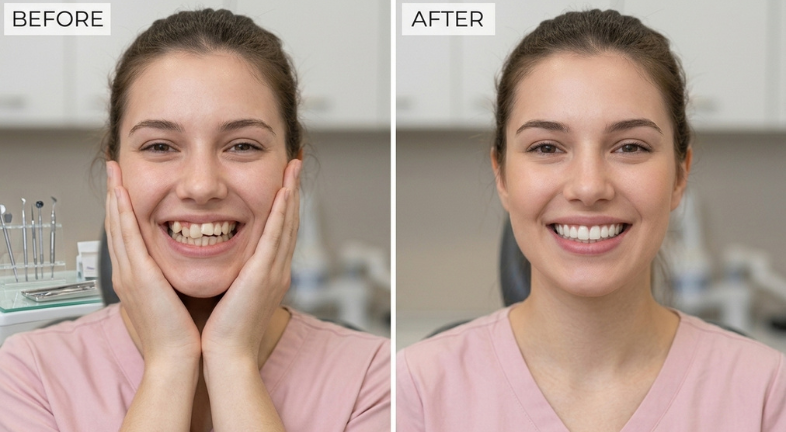 Do Clear Aligners Change Your Face Shape?
Yes, aligners can change your face shape slightly, mainly by changing the position and alignment of your teeth and, in some cases, your bite. But they don’t change your actual bone structure.
Read More What to Do If You Lose Your Aligners While Traveling
The first thing is to contact your provider and figure out if you can switch back to a previous tray or move to the next one. Losing your aligners while traveling can be stressful, but it does not necessarily mean your treatment will be disrupted. The most important thing is to act quickly. Look for your missing tray, wear your previous aligner if advised, and contact your provider for instructions on what to do next. In this guide, we’ll explain what to do if you lose your aligners while traveling, how a lost aligner can affect your treatment timeline, and what you can do to prevent it from happening again.
Read More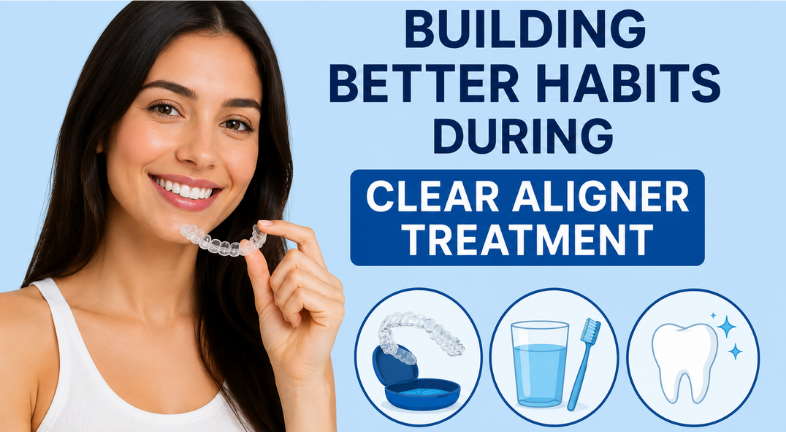 Building Better Habits During Clear Aligner Treatment
Building better habits during clear aligner treatment can help you stay consistent with aligner wear, oral hygiene, and your treatment plan. Simple routines, such as wearing your aligners as directed, cleaning them regularly, and keeping track of your wear time, can make treatment easier to manage and help you stay on schedule. In this guide, we’ll cover the most important habits during clear aligner treatment and practical ways to make them part of your daily routine.
Read More



Heading