Table of contents
A snaggle tooth can be one of those small things that somehow feels big. It might not hurt. It might not even be noticeable to others. Yet, once you see it, it is hard to ignore. People often describe it as a tooth that sticks out, twists slightly, or refuses to line up with the rest of the smile. Some wear it proudly, while others want it gone yesterday.
Before jumping into solutions, it helps to slow down and understand what is really going on. Because fixing snaggle teeth is not just about straightening enamel. It is about comfort, function, confidence, and sometimes patience. This guide breaks everything down. What it is, why it happens, and most importantly, how to fix a snaggle tooth using different methods.
What Is a Snaggletooth? (H2)
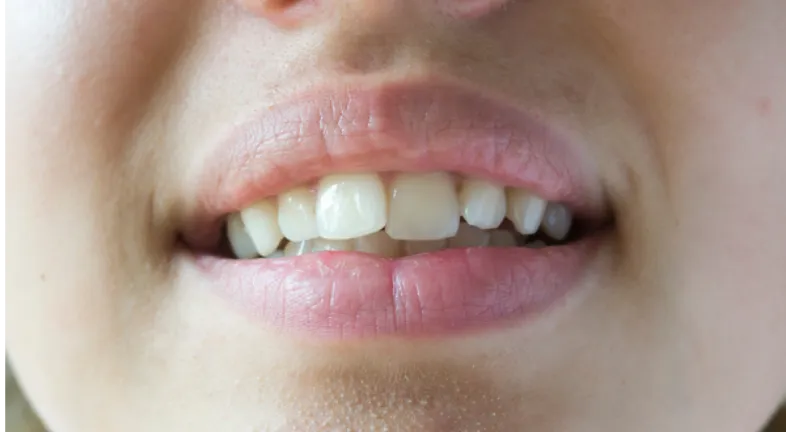
People often ask, what is a snaggletooth, and the answer is simpler than it sounds. A snaggletooth is a tooth that sticks out from the rest of the teeth. Usually, it is slightly crooked, rotated, or pushed forward. It is not always dramatic, but it stands out enough to earn a name.
The condition can involve one tooth or several. Sometimes it affects the front teeth. Other times, it shows up in the canines, which are already pointy by nature. That combination tends to grab attention quickly. A snaggle tooth is not a medical diagnosis. Dentists do not write it down as such. It is more of a descriptive term people use when talking about misalignment in a casual way. Still, it matters. Because misaligned teeth can affect more than appearance.
Not all crooked teeth are considered snaggletooth teeth. Mild crowding or spacing does not always create that standout look. A snaggle tooth tends to break the line of the smile. It interrupts symmetry.
A snag tooth rarely appears for no reason. In most cases, it is the result of how teeth, jaw size, and timing interact over many years.
<h3 id="tooth-size-and-arch-size-mismatch">Tooth-Size and Arch-Size MismatchOne of the most common causes of snaggle teeth is a mismatch between tooth size and jaw space. If the dental arch is too small and the teeth are relatively large, something has to give. Often, one tooth gets pushed outward or rotated, becoming the snaggle tooth. This is especially common in the front teeth, where space is limited, and aesthetics are more noticeable.
Sometimes a tooth erupts later than expected or comes in at an awkward angle. When that happens, it may miss its ideal spot and settle wherever there is room. Over time, it becomes more prominent as the surrounding teeth stabilize.
When baby teeth fall out too early, nearby teeth may drift into the space. That shift can block proper eruption paths for adult teeth later on. The result is crowding and misalignment, often leading to snaggletooth teeth in adulthood.
Jaw shape, tooth size, and eruption patterns are often inherited. If parents have crowded teeth or alignment issues, children may experience the same thing. Genetics quietly shapes many cases of snaggle teeth.
Thumb sucking, tongue thrusting, prolonged pressure habits, or dental injuries can all influence how teeth settle. Even minor trauma can cause a tooth to shift slightly and remain that way.
Here is where opinions split. A snag tooth can be charming to some people; it adds character. Models, actors, and influencers sometimes keep theirs intentionally. But there are cases where it becomes a problem. Food traps more easily, cleaning gets harder, and the bite can feel off. Over time, that can stress other teeth. So the real question is not whether it looks perfect. It is whether it affects your oral health or quality of life. If it does, learning how to fix snaggletooth issues becomes important.
There is no single solution that works for everyone. Dentists look at age, severity, bite alignment, budget, and long-term goals. Some fixes are subtle. Others are dramatic. Below are the most common ways for crooked teeth straightening , along with honest pros and cons.
Snaggle tooth braces are one of the most reliable ways to correct misalignment. Braces apply steady pressure over time, guiding the tooth into its proper position.
This approach addresses the root cause instead of masking the issue. That matters.
Braces are not exciting. But they work. Many orthodontists still consider them the gold standard for how to fix a snaggle tooth properly.
Clear aligners have changed how people think about straightening teeth. They are discreet, removable, aesthetically pleasing, do not cost much, and do not come with food restrictions. For mild to moderate snaggletooth teeth, Caspersmile Clear Aligners can be effective.
Veneers take a different approach. Instead of moving the tooth, the appearance is changed. A thin shell is placed over the tooth to create a straighter look. This option is cosmetic-focused.
Veneers can hide a snaggle tooth, but they do not correct its position. That matters for long-term oral health.
Bonding uses tooth-colored resin to reshape the tooth. Dentists sometimes use it when a snaggle tooth is only slightly out of alignment.
Bonding works best when expectations are realistic. It is cosmetic, not structural.
This method involves shaving down small amounts of enamel to make the tooth appear straighter. It is subtle. Sometimes almost invisible.
Contouring is often combined with bonding for better results.
In rare situations, extraction is recommended. This happens when overcrowding is severe, and space is needed for alignment.
Extraction is never the first option. But sometimes it is the right one.
This question comes up often. The answer is yes, sometimes. But it depends on what you mean by fixed. Cosmetic fixes can change how it looks. Orthodontics changes how it functions. Knowing the difference helps avoid regret later.
Treatment time varies:
Fast does not always mean better. Slow movement protects the tooth and surrounding bone.
Costs depend on location, provider, and method. Insurance may cover orthodontics if medically necessary. Cosmetic procedures are often out of pocket.
There is no perfect solution. Only the right one for you. Ask questions, get opinions, and think long-term. Consider how much maintenance you want. Think about comfort, cost, and confidence. Fixing a snaggle tooth is not about perfection. It is about feeling good when you smile, chew, and speak.
A snaggle tooth can be perceived as either a flaw or a feature. Both perspectives are valid. What matters is choice. Knowing your options gives you control. Whether you choose snaggle tooth braces, clear aligners, veneers, or no treatment at all, the decision should feel informed.

Curated the best for your knowledge
 Are Ultrasonic Cleaners Worth It for Clear Aligners?
Yes, ultrasonic cleaners for clear aligners can be worth it, especially for removing plaque, debris, and buildup that regular brushing may miss. They use high-frequency sound waves to create tiny bubbles that help loosen buildup from the trays and other orthodontic appliances, including retainers, mouthguards, and night guards. However, they are not essential for everyone and have some limitations. Here’s how ultrasonic cleaners work, their benefits and drawbacks, and how to use one safely.
Read More The Aligner Diet: Can Clear Aligners Really Cause Weight Loss?
Some people notice they've lost a little weight after starting clear aligner treatment. It can happen, especially during the first few weeks, when taking the trays out for every meal and snack takes some getting used to. Sore teeth can also make eating less appealing for a day or two. The amount of weight lost varies from person to person, and not everyone experiences this change. Below, we'll break down why it happens, whether it's actually good for you, and what to know before treating your aligners like a diet plan.
Read More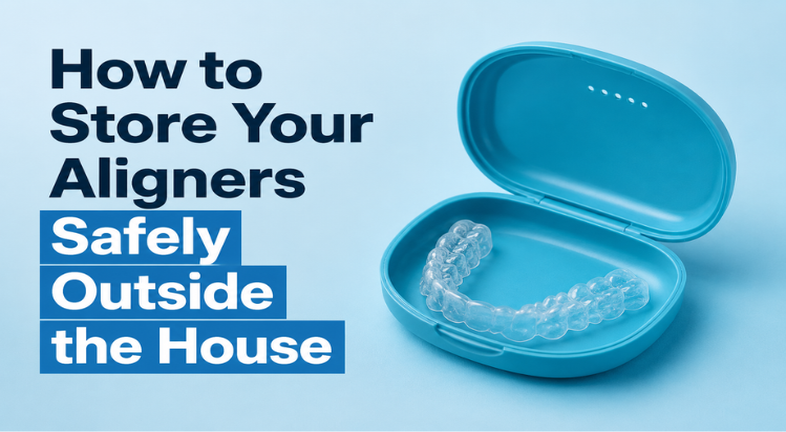 How to Store Your Aligners Safely Outside the House
Taking your clear aligners out while you're away from home is part of everyday life. The important part is knowing where to keep them until it's time to wear them again. Whether you're eating at a restaurant, traveling, running errands, or attending a social event, instead of leaving them on the table or wrapping them in a tissue or napkin, place them in a protective aligner case. Poor storage can lead to lost, damaged, or dirty aligners.
Read More



Heading