.png)
A teeth retainer is an individually crafted dental appliance used to maintain the new and improved positioning of one's teeth. As opposed to braces or aligners, which help to realign your teeth by moving them, the retainer works to ensure that your teeth stay in place.
The misconception that once you've completed your teeth straightening treatment, you'll no longer need anything else is incorrect. The reality is that retention is a lifetime process. Teeth are living things, and as such, are dynamic, meaning they move with time, especially in reaction to eating, aging, and even slight alterations in the jaw.
Teeth retainers are orthodontic appliances that are used following procedures like braces and other aligning tools for keeping the teeth from moving back into their former position. They are usually tailor-made to fit the individual teeth, and may be either fixed or removable retainers.
There are several reasons to use retainers beyond maintaining tooth alignment. They also help the surrounding bone and soft tissue adapt to the teeth’s new position, a process that takes time.
According to a scientific article written in 2021 in the United Kingdom, and published in the British Dental Journal by scientists Molyneaux, Sandy, and Ireland, the scientists stated that retention was very important for achieving perfect tooth positioning after being treated. The scientists concluded that retention was essential since the teeth tend to move back to their biological and mechanical position due to the natural tendencies of the teeth. This research showed that the use of both removable and fixed retainers was very common in the United Kingdom, with the duration of wearing them varying from one patient to another.
Another notable study done in the UK by Parmjit Singh, Sarri Grammati, and Robert Kirschen in 2009 involved analyzing the usage of orthodontic retentive devices among various practice setups. According to the findings of the study, vacuum-formed retainers, along with Hawley retainers, were the most common kinds of retentive devices used, depending on the situation and need of the patients. What was clear from the study was that there is no one-size-fits-all when it comes to orthodontic retention practices, but what matters most is consistent use of a retainer in preventing recurrence.
Removable orthodontic retainers are among the most popular choices today due to their convenience and ease of use. These retainers can be taken out while eating, brushing, or during special occasions, making them highly adaptable to daily routines.
There are two main types of removable retainers: clear plastic retainers and Hawley retainers. Clear retainers are nearly invisible and fit snugly over your teeth, while Hawley retainers use a combination of acrylic and wire.
Many patients prefer clear retainers because they are discreet and comfortable. At the same time, they provide excellent support in maintaining alignment when worn consistently.
After braces are removed, your orthodontist will almost always recommend wearing a teeth retainer. This step is not optional if you want to maintain your results.
Initially, you may be required to wear your retainer full-time, except while eating or cleaning. Over time, this schedule typically shifts to nighttime wear. This gradual reduction helps your teeth settle while still preventing movement.
Skipping this phase can lead to noticeable shifting within weeks. Therefore, consistency is key. Even years after treatment, occasional retainer use helps preserve your smile.
Teeth retainers are primarily used after orthodontic treatment, but their applications extend beyond that.
They are commonly used:
In some cases, retainers are also used to manage spacing issues or slight crowding without undergoing full orthodontic treatment again.
Understanding the types of retainers helps you choose the one that best fits your lifestyle and dental needs.
Removable retainers are custom-made using impressions or digital scans of your teeth. The process ensures a precise fit, which is essential for effective retention.
Clear retainers are made from durable plastic that molds closely to your teeth. On the other hand, Hawley retainers include a metal wire that holds teeth in place, supported by an acrylic base.
The manufacturing process focuses on accuracy and comfort, ensuring that the retainer applies consistent pressure without causing discomfort. Providers like Caspersmile offer at-home teeth straightening with the inclusion of retainers. It means you can get your custom-fit clear retainers at home within your budget.
Fixed retainers, also known as permanent retainers, consist of a thin wire bonded to the back of your teeth. They are typically placed on the lower front teeth, where relapse is most common.
Since they remain in place at all times, they eliminate the need for compliance. However, they require careful cleaning to prevent plaque buildup.
Although fixed retainers are highly effective, they may not be suitable for everyone. Your orthodontist will recommend them based on your specific needs.
Retainers apply a gentle and controlled force to keep teeth in position. This initial pressure is often what patients notice as tightness. It gradually decreases as the teeth settle into their maintained position.
Unlike braces, which actively move teeth, retainers primarily stabilize them. Therefore, the force applied is significantly lower and more consistent.
Removable retainers may feel slightly uncomfortable when you first start wearing them or after a break in usage. This sensation is usually described as tightness rather than pain.
The discomfort typically fades within a few days as your teeth adjust. However, if the pain persists, it could indicate that the retainer no longer fits properly.
Regular use helps minimize discomfort. Additionally, modern dental retainers are designed with comfort in mind, making them much easier to wear than older versions.
Retainers do not directly strengthen teeth, but they play a crucial role in maintaining alignment, which indirectly supports overall oral health.
Properly aligned teeth are easier to clean and less prone to issues like plaque buildup, gum disease, and uneven wear. As a result, retainers contribute to a healthier and more stable dental structure.
The benefits of teeth retainers go far beyond maintaining a straight smile. They are essential for long-term oral health and stability.
Key benefits include:
Additionally, retainers are a cost-effective solution compared to undergoing orthodontic treatment again.
Proper care ensures that your retainer remains effective and hygienic. You should clean your retainer daily using a soft toothbrush and mild soap. Avoid using hot water, as it can warp the material. When not in use, store it in a protective case to prevent damage. Regular cleaning not only maintains the retainer but also prevents bacterial buildup, which can affect oral health.
You should contact your orthodontic consultant if your retainer feels too tight, becomes loose, or shows signs of damage. These issues can compromise its effectiveness.
Additionally, if you experience persistent discomfort or notice changes in your tooth alignment, it is important to seek professional advice.
If you are considering alternatives or adjustments, this is also a good time to explore options like clear aligners, which can help correct minor shifts before they become major issues.
Having a perfectly aligned smile will not be achieved once you get your braces off or even when you remove your aligners. The teeth retainer is what helps to keep everything stable.
The best way to understand how a teeth retainer works is by learning more about it and picking one that suits you best. There is no need to miss out on a process as important as using retainers since modern technology has helped make them more comfortable than ever.

Curated the best for your knowledge
 The Aligner Diet: Can Clear Aligners Really Cause Weight Loss?
Some people notice they've lost a little weight after starting clear aligner treatment. It can happen, especially during the first few weeks, when taking the trays out for every meal and snack takes some getting used to. Sore teeth can also make eating less appealing for a day or two. The amount of weight lost varies from person to person, and not everyone experiences this change. Below, we'll break down why it happens, whether it's actually good for you, and what to know before treating your aligners like a diet plan.
Read More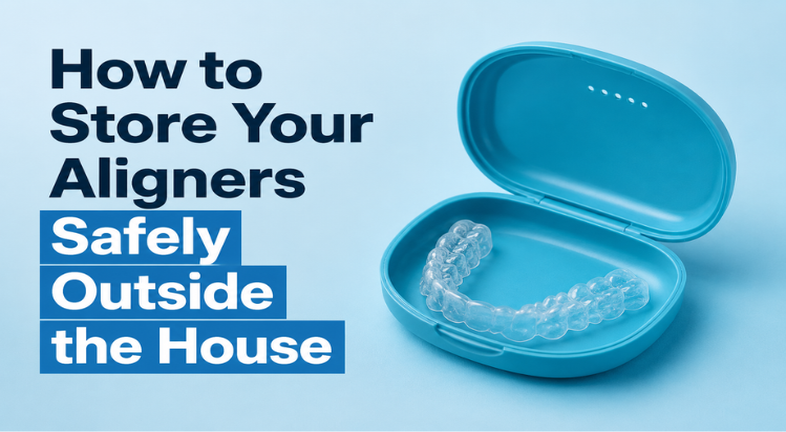 How to Store Your Aligners Safely Outside the House
Taking your clear aligners out while you're away from home is part of everyday life. The important part is knowing where to keep them until it's time to wear them again. Whether you're eating at a restaurant, traveling, running errands, or attending a social event, instead of leaving them on the table or wrapping them in a tissue or napkin, place them in a protective aligner case. Poor storage can lead to lost, damaged, or dirty aligners.
Read More Should You Use Mouthwash to Clean Aligners?
Can you clean aligners with mouthwash? Mouthwash is not the preferred way to clean clear aligners. It is formulated for rinsing your mouth, while aligner-safe cleaning products are designed to clean the trays. Coloured mouthwash can also stain or discolour clear plastic. Remove your aligners before using mouthwash, then clean your trays separately with cool or lukewarm water and an approved cleaning method.
Read More


Heading