
Getting braces is a little bit like starting a new job. At first, everything feels weird: the tools, the rules, and all of the strange looks. Then all of a sudden, it becomes routine, and you realize it isn’t that bad. If you are about to begin a new life with braces, or you just got braces, you might be thinking: What is this really going to feel like on a day-to-day basis?
The short answer? Life with braces will be a combination of kind of awkward beginnings, tiny adjustments, and surprising victories. Let’s break this down.
The braces’ pain and discomfort are real. The moment those brackets click onto your teeth, your mouth feels like a construction site. Your tongue doesn’t know where to go, your lips rub against the metal, and eating suddenly requires way more thought than it ever did before. This stage is honestly the toughest, not because it’s unbearable, but because it’s unfamiliar.
Think of this stage like breaking in a new pair of shoes. The first few walks might rub blisters, but soon enough, you forget you’re even wearing them.
Living with braces changes little things you never thought about before. For example, you’ll learn quickly that spinach is no longer your friend. And apples? They’re suddenly a two-step process: slice first, bite later.
Here’s what daily life with braces usually involves:
Daily life with braces is about small tweaks. It’s not a total lifestyle overhaul, more like re-learning how to do old habits with a new set of rules.
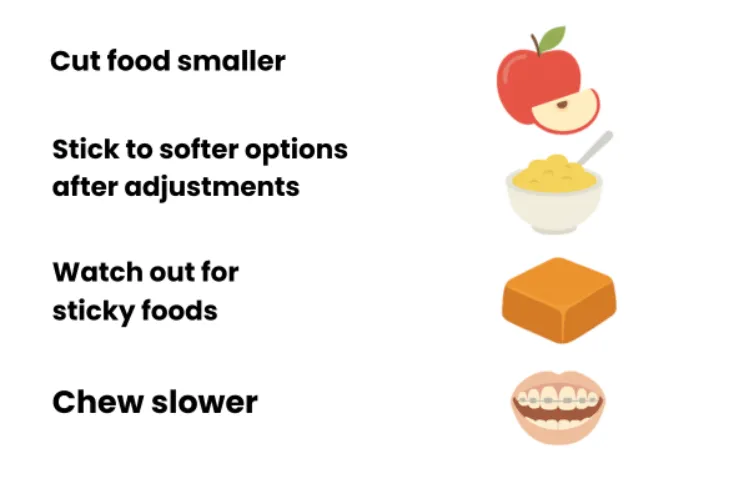
This is the part everyone worries about. Will I be stuck with soup for two years? No. But there are tricks to make eating easier and avoid emergency trips back to the orthodontist.
At first, the extra effort feels like a chore. You’re suddenly spending twice as long in the bathroom at night, planning meals differently, and carrying around orthodontic wax in case a wire pokes your cheek. But here’s the thing: your brain adapts fast.
One of the underrated parts of living with braces is the social side. Some people feel self-conscious about the “metal smile.” Others embrace it, decorating their bands with colours. The truth? Most people don’t care nearly as much as you think they do.
In fact, braces often spark conversations. Someone will say, “Oh, what colour did you pick this time?” or share their own braces story. It’s a reminder that you’re not alone in this.
And let’s face it, knowing your teeth are on their way to being straight can boost your confidence, even if the current stage feels awkward.
The journey can take anywhere from 12 months to 3 years, depending on your teeth. During that time, expect progress to feel both slow and sudden. You’ll go weeks without noticing much change, then one day glance in the mirror and realize your teeth have completely shifted.
Long-term, here’s what you can expect:
If you’re in the UK and considering alternatives, clear aligners are an option for those who qualify (not every case does). Brands like Invisalign are well-known, but there are also more affordable providers such as Caspersmile and Smile White, which ship aligners straight to your door with virtual check-ins.
Traditional braces, however, still handle complex cases better. Many orthodontists recommend metal or ceramic braces when teeth need significant movement.
Living with braces is about more than just having straighter teeth. It is about patience, resilience, and moments of pleasant surprise, like mastering the skill of eating corn off the cob with a spoon or finally realizing you may have become so accustomed to the wires that you no longer notice them in your mouth.
Of course, there is discomfort, and there will be days when cursing the brackets is not only justified but rational. However, there is an end, a finish line, and crossing it feels magical. One day, you will be braces-free, passing your tongue over your newly smooth, straight teeth with awe and amazement that all those small movements and aches have suddenly made sense!
That is life with braces; it is not perfect, it is not painless, but it is worth every single step of the way.

Yes. You’ll adjust your eating and cleaning habits, but after a few weeks, most things feel normal again.
That the first few days are the hardest, but it gets easier fast. Also, wax and a water flosser can save you a lot of hassle.
Consultation and fitting, Initial alignment (teeth start moving), Bite correction (fixing overbites/underbites), Finishing touches (closing gaps, refining), Retainers to keep everything in place
Usually, in about a week or two, your tongue adapts quickly.
Curated the best for your knowledge
 UV Ultrasonic Cleaner vs. Cleaning Tablets: Which Keeps Aligners Cleanest?
A UV ultrasonic cleaner offers a deeper, device-based cleaning approach, while cleaning tablets give you a simple soak-and-rinse option. Both can help remove daily buildup, but the way they clean your aligners is quite different.
Read More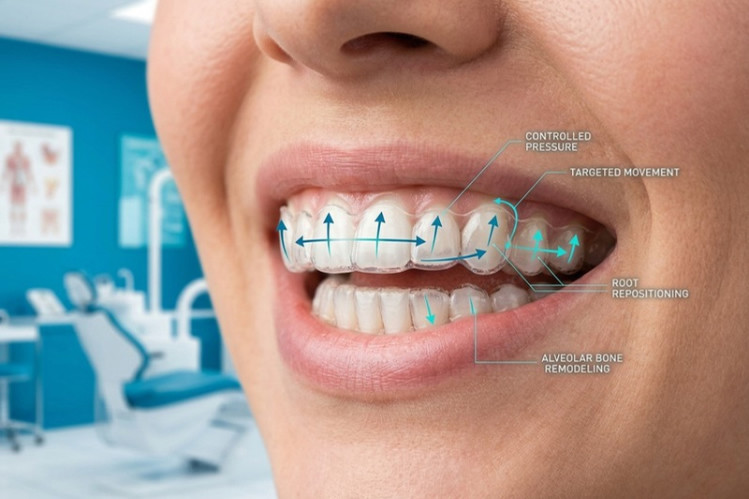 Science Behind a Perfect Smile: How Clear Aligners Shift Your Teeth Safely
Clear aligners work by applying controlled, gentle pressure to specific teeth, gradually guiding them into planned positions over time. Each custom-made aligner fits over the teeth and creates small movements according to a digital treatment plan. As the teeth respond to this pressure, the surrounding bone and periodontal ligament remodel to support their new positions. Caspersmile uses a planned series of clear aligners to guide tooth movement throughout treatment.
Read More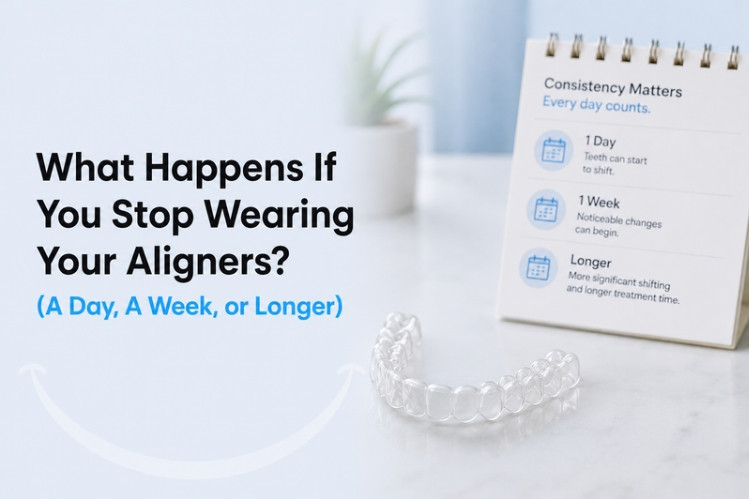 What Happens If You Stop Wearing Your Aligners? (A Day, A Week, or Longer)
If you stop wearing clear aligners, your teeth start drifting back toward their original position almost immediately, and the longer the break lasts, the harder it becomes to reverse. That's the short answer. But how much damage actually gets done depends on the timeframe. A missed evening is very different from a missed month.
Read More
 UK
 USA
 Australia