


.png)
Key Takeaways
- The first week wearing clear aligners is an adjustment period, and discomfort improves within a few days.
- Wear your aligners for 20 to 22 hours each day to keep your treatment progressing as planned.
- Mild pressure, sore teeth, and slight speech changes mean your teeth are adjusting.
- Always remove aligners before eating, drink only water while wearing them, and clean them daily.
- Properly fitting aligners should feel snug, stay in place, and any small gaps often close quickly.
- Contact your dental provider if your aligners don’t fit properly, break, or cause severe pain.
The first week wearing clear aligners usually brings mild pressure, slight soreness, a little lisp, and some extra salivation. However, the adjustment period is short, and most of these subside within the first week.
That being said, the experience is subjective. For some, the first week with aligners is a breeze. For others, it might require some adjustments. But overall, aligners are significantly more comfortable than any other orthodontic treatment.
So, let’s see what to expect with clear aligners in the first week to help you avoid unnecessary worry, build good habits early, and stay on track for a successful treatment.
Day-by-Day Timeline: Your First Week with Clear Aligners
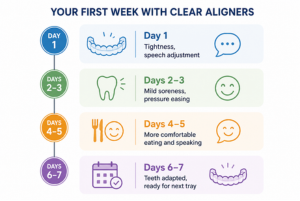
The first seven days are all about getting adjusted to clear aligners. There will be an appliance in your mouth that you’ve not adjusted to, and it will be in there for 20 to 22 hours each day, since it is crucial to follow the clear aligner wear schedule. That definitely brings different sensations and reactions from your oral cavity.
However, it usually goes away within the first week, and you can carry on the treatment without much issues. So, here’s what the clear aligners first week experience feels like.
Day 1
The first tray often feels tight because it has already started guiding your teeth into new positions. This is when your oral cavity reacts the most. You may notice:
- Tightness after inserting your aligners
- Pressure on your teeth and gums
- Difficulty removing and wearing them
- Increased salivation
- Slight changes in speech, especially with “s” or “sh” sounds
The first day is when you try to get the hang of things. You’ll realize what naturally works for you, and where you need to make adjustments. Since it is the beginning of your new routine with changed eating times and thorough oral hygiene, plus adjusting to the trays, you might feel all over the place.
Days 2–3
This stage is when mild soreness is most noticeable, especially while chewing firmer foods. However, your routine and habit now start to build. Most people align with the new eating and oral care habits by day 2 or 3. There is reduced salivation. Speaking with clear aligners becomes easier as lisp is reduced. And you also figure out how to smoothly remove and wear your trays.
The only things that are still there are pressure and mild soreness.
Days 4–5
By the middle of the week, most early discomfort has faded. The pressure and soreness are reduced significantly. And aligners become less noticeable in your daily routine. You may notice that:
- Eating with clear aligners feels more comfortable
- Speaking sounds more natural
- Wearing aligners becomes part of your day-to-day
If you’ve stayed consistent, your aligners should feel noticeably easier to wear.
Days 6–7
Toward the end of the week, your teeth have adapted to the current tray. The aligners often feel less tight because your teeth are now in line with the planned movement and your mouth has adjusted to the appliance. This is also a good time to prepare mentally for your next tray.
Tips to Make Your First Week Easier
Small habits make a noticeable difference during the adjustment period.
Tip 1: Wear aligners for the recommended 20 to 22 hours every day.
Tip 2: Drink plenty of water to reduce dry mouth .
Tip 3: Remove aligners carefully instead of pulling from the front.
Tip 4: Clean your aligners every day with tap water and approved cleaners.
Tip 5: Use orthodontic wax if tray edges temporarily irritate your cheeks.
Tip 6: Stay consistent even when they feel tight because frequent removal slows progress.
Now, the most important thing here is to consider how wear time affects treatment duration . If your wear time is inconsistent, it not only prolongs the treatment, but it makes it harder to adjust to aligners. In some cases, it totally detracks the treatment.
What to Eat or Drink During the First Week?
Good eating habits protect both your teeth and your aligners.
Eating with clear aligners is easy once you get into the habit. Always remove your aligners before eating, as chewing with them can crack or warp the trays and affect your treatment.
You can only drink water when your aligners are in. Coffee, tea, soft drinks, and juices may strain the trays or increase the risk of tooth decay.
Hot beverages should also be avoided while wearing aligners because heat can warp the plastic. Before putting them back in, brush your teeth whenever possible or at least rinse your mouth with water.
Signs Your Aligners Are Fitting Properly
Many new patients worry that something is wrong simply because the trays feel tight. In most cases, a snug fit actually shows they’re working as intended.
Signs of a proper fit include:
- The aligners fit snugly over every tooth.
- Slight pressure is present, especially after changing trays.
- Small gaps near certain teeth may close within a couple of days.
- The trays stay securely in place during normal talking and daily activities.
When Should You Contact Your Dental Provider?
Some situations deserve professional attention instead of waiting.
Contact your provider if:
- Your aligners still won’t seat fully after several days.
- Pain becomes severe or keeps getting worse.
- A tray cracks or breaks.
- Your gums bleed or you develop sores.
- Your teeth stop tracking with the aligners.
Prompt action often prevents treatment delays, ensures safety, and avoids needing replacement trays later.
Building Confidence Beyond the First Week
The first week wearing clear aligners is usually the biggest adjustment, but it rarely predicts the rest of your treatment. Once daily habits become automatic, most people spend very little time thinking about their aligners.
Stay consistent, follow your provider’s instructions, and remember that temporary discomfort is part of steady progress toward a healthier smile.





Heading