
 UK
 USA
 Australia

Key Takeaways
- Refinement can correct tooth movements that were not fully achieved.
- Small gaps or rotations may show that treatment is not quite finished.
- An uneven bite can mean your teeth need further adjustment.
- A visible gap under an aligner may indicate poor tracking.
- A retainer that does not fully seat should be professionally checked.
- Refinement is different from tooth movement caused by relapse.
- Good wear habits can help prevent avoidable treatment delays.
If your teeth still look slightly out of position after your final aligner, your bite feels different, or one or more trays no longer fit closely, you may need an aligner refinement. These are some of the clearest signs you need an aligner refinement.
Refinement means using another series of trays to make small corrections before treatment is considered complete. It is fairly common because teeth do not always respond exactly as predicted, even when you follow your treatment plan carefully.
6 Signs You Need an Aligner Refinement
Here are the six signs you need an aligner refinement:
Your Teeth Still Look Misaligned After Your Final Tray
Your final tray should bring your teeth close to their planned positions. If you still notice small gaps, rotation, crowding, or a tooth sitting slightly higher than expected, your provider may recommend a clear aligner refinement.
This does not automatically mean something went wrong. A 2025 systematic review found that the predictability of clear aligner movement varies considerably by the type of movement being attempted.
Your Bite Feels Off When You Close Your Teeth
Straighter teeth do not always mean a fully corrected bite. You may notice that one tooth touches first, your teeth do not meet as evenly, or your bite simply feels different when you close your mouth.
Your provider can check whether this reflects incomplete tooth movement or another bite issue that needs correction with refinement aligners.
One or More Teeth Aren’t Tracking Properly
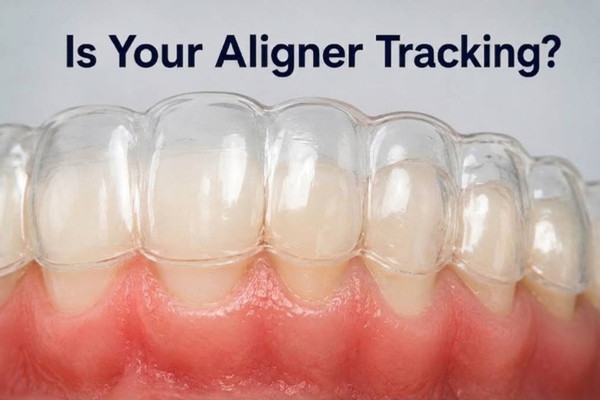
An aligner should sit closely against your teeth. If you see a noticeable space between the tray and one tooth, that tooth may not be following its planned movement. This is commonly described as poor tracking.
Some movements are harder to achieve precisely than others. For example, a 2025 systematic review found average predictability for upper molar movement was about 61.1%, showing why some planned movements may need additional correction. When these issues occur, understanding clear aligner treatment problems explained can also help you recognise why a tray may not be fitting or tracking as expected.
Your Retainer Doesn’t Seat Properly After Treatment
A new retainer can feel snug without meaning that refinement is necessary. However, if it repeatedly fails to seat fully or exposes a noticeable change in tooth position, have it checked.
Your provider can determine whether your teeth never reached their planned positions or whether they have started to shift after active treatment.
Your Smile Looks Uneven in Photos
Photos can make small differences easier to spot. You might notice that one tooth remains rotated, spacing looks uneven, or one side of your smile appears different from the other.
Still, photographs alone cannot determine whether you need refinement. They are simply a useful reason to ask your provider for a closer assessment.
Your Dentist Flags It at Your Final Check-In
Your dentist or orthodontist compares your final tooth positions and bite with the treatment plan. They may notice differences that are difficult to identify yourself.
Refinement Isn't the Same as Relapse
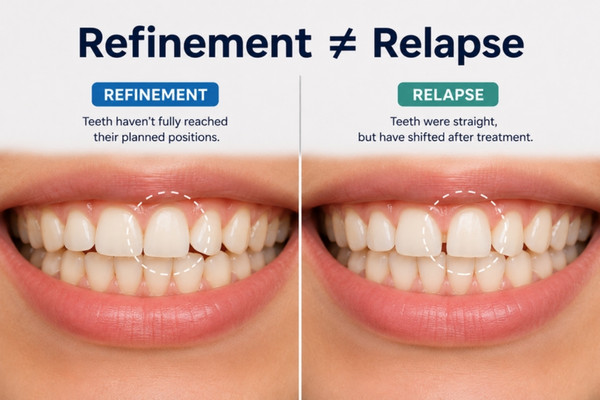
Refinement and relapse are not the same thing. Refinement addresses teeth that have not fully reached their planned positions during active treatment. Relapse refers to teeth moving after treatment has already been completed.
This distinction matters when considering additional aligners after treatment. A tight retainer may indicate minor movement, but it does not automatically mean you need another round of active treatment.
What Happens During an Aligner Refinement?
Your provider first checks your teeth, bite, and current progress. New scans or impressions may be taken so the remaining movements can be planned more accurately.
A new series of refinement aligners is then created around those specific corrections. The number of trays and treatment time vary because refinement depends on how much movement remains.
Knowing When Your Treatment Needs Another Step
A refinement does not necessarily mean your clear aligner treatment failed. It often means a few planned movements need another opportunity to reach their intended positions.
If your final teeth, bite, or aligner fit do not look or feel right, do not simply move into long-term retention without asking about it. An assessment can determine whether refinement is appropriate or whether your result is already considered clinically complete.



Heading