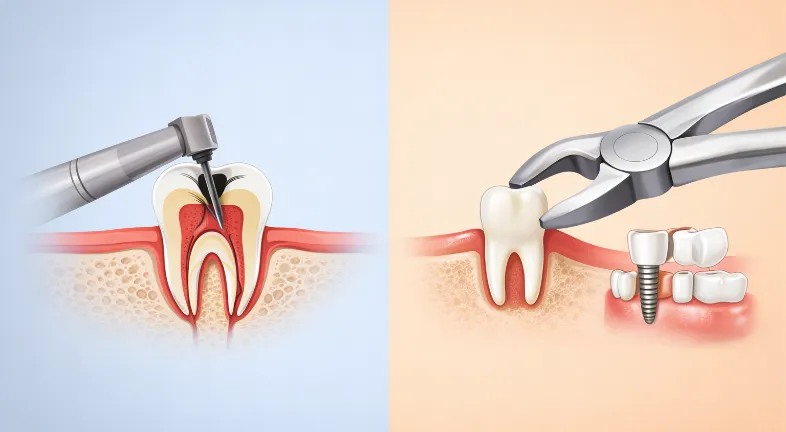
When experiencing dental pain, you might feel overwhelmed. It could come in the form of sharp, constant, and unbearable pain, which can lead to a lot of confusion about what your next step should be. When a dentist discusses root canals vs extractions, it creates a lot of pressure because it is a life-changing decision!
Both procedures address significant damage to a tooth's pulp or an infected tooth; however, their respective long-term outcomes differ significantly. Understanding the advantages of having a root canal versus the cases where an extraction would be more appropriate and learning how these two procedures are performed may assist you in making a decision that accommodates your health, comfort level, and lifestyle.
A root canal procedure, as explained, is often less intimidating than it sounds. At its core, it is a treatment aimed at saving a tooth that is infected or severely decayed.
The pulp inside your tooth contains nerves and blood vessels, which can become inflamed due to deep cavities, cracks, or trauma. Instead of removing the tooth, a dentist cleans out the infected pulp, disinfects the canals, and seals them to prevent further infection.
<h3 id="the-benefits-of-root-canal">The Benefits of Root CanalThe benefits of root canal treatment are significant, especially when preserving your natural tooth is the goal. First and foremost, it allows you to keep your original tooth, maintaining natural bite alignment and appearance.
Avoiding extraction can also prevent the shifting of surrounding teeth, which often leads to jaw or bite issues. Root canals are highly effective, with success rates exceeding 90 percent when properly performed. Another key advantage is that the procedure can relieve persistent tooth pain caused by infection or nerve damage, letting you return to normal eating and chewing habits relatively quickly.
After a root canal, the root canal recovery time varies depending on the complexity of the treatment and your overall dental health. Typically, patients experience mild discomfort or soreness for a few days, which can be managed with over-the-counter pain relievers.
Swelling is minimal compared to extraction, and normal eating can often resume within a day or two. Long-term care usually involves a dental crown to reinforce the tooth and prevent fractures, but once restored, the tooth functions almost like a natural tooth without ongoing problems.
Sometimes, a tooth extraction procedure is the only viable option. When is tooth extraction necessary? Situations often include severe decay that cannot be repaired, advanced periodontal disease, fractures that extend below the gum line, or persistent infection that doesn’t respond to antibiotics or root canal therapy.
In some cases, wisdom teeth may be extracted to prevent overcrowding or infection. Extraction removes the tooth entirely, which eliminates the source of pain and infection, but it comes with considerations for replacement to prevent long-term dental issues.
A tooth extraction procedure is generally straightforward but requires careful planning. Local anesthesia is applied to numb the area, and depending on the complexity, the dentist may simply loosen and remove the tooth or perform a surgical extraction for more complicated cases.
Stitches may be needed in surgical extractions. Post-procedure instructions are crucial: avoiding hard foods, following proper oral hygiene, and managing swelling with cold compresses can all contribute to a smoother recovery.
The tooth extraction recovery time usually spans one to two weeks for basic extractions, though healing of the bone and gum tissue can take longer. Pain is typically more noticeable than after a root canal, especially in the first 48 hours.
Swelling, minor bleeding, and tenderness are common, but these symptoms gradually decrease with proper care. Replacing the missing tooth with implants, bridges, or dentures is often recommended to restore chewing function and maintain facial structure.
Choosing between root canal vs extraction involves weighing several factors, including long-term oral health, cost, recovery, and lifestyle.
Root canals preserve the natural tooth, which helps maintain proper bite alignment, prevent shifting of other teeth, and avoid jawbone deterioration.
Extraction removes the tooth, which may lead to bone loss over time if not replaced promptly. While implants can prevent bone loss, they are more invasive and costly than keeping your natural tooth.
Cost plays a role in the decision. Root canals often cost more upfront than a basic extraction, but the preservation of the tooth may reduce long-term expenses related to replacement options.
Tooth extraction may seem cheaper initially, but costs for implants, bridges, or dentures later can add up significantly. Insurance coverage can also influence which option is more feasible financially.
In terms of pain, patients often report that root canal discomfort is manageable and short-lived, while extraction can cause more pronounced pain and swelling.
Recovery for a root canal is typically faster and less disruptive to daily life. Extraction recovery is longer, particularly if a surgical approach is needed or if multiple teeth are removed.
A preserved tooth from a root canal looks and functions like your natural tooth. Extraction, unless replaced with an implant or bridge, can create gaps, affect chewing efficiency, and potentially alter your facial appearance over time. For front teeth, this aesthetic consideration is particularly important.
Deciding between a root canal vs extraction isn’t always straightforward. You should consider several factors to make the best choice for your situation.
If the tooth’s infection or decay is too extensive, a root canal may not be possible. Deep cracks, fractures, or root resorption can prevent proper sealing, making extraction necessary. Conversely, if the tooth can be successfully treated, a root canal offers preservation and long-term stability.
Your general health can affect the decision. Certain conditions, such as compromised immunity, heart conditions, or bleeding disorders, may make root canal or extraction riskier. Your dentist or endodontist will assess whether you are better suited for one procedure over the other.
Younger patients often benefit more from root canal treatment because preserving natural teeth early can prevent complications later. For older adults with extensive dental histories or multiple restorations, extraction might be simpler and less prone to future complications. Lifestyle factors, such as diet, oral hygiene habits, and willingness to commit to follow-up care, also influence the decision.
There are myths surrounding both root canals and extractions that can cloud judgment.
Some believe root canals are unbearably painful. Modern techniques, however, make the procedure relatively comfortable, with anesthesia ensuring minimal discomfort. Another misconception is that a root canal is a temporary fix. On the contrary, when properly restored with a crown, the tooth can last a lifetime.
People often worry that extraction will drastically change their face shape. While missing teeth can impact appearance, timely replacement with implants or bridges prevents significant changes. Some assume extraction is always simpler than root canal treatment. In reality, complex surgical extractions can be more involved and require longer recovery than a standard root canal.
Not every dental problem fits neatly into one treatment box, and real life rarely works in clean categories. The decision between root canal vs extraction often comes down to the specific condition of the tooth, how much healthy structure is left, and what outcome you care about most in the long run. Looking at a few everyday scenarios makes it easier to see where each option tends to make more sense, instead of relying on fear or assumptions alone.
Root canal treatment is ideal when you have:
In these cases, the benefits of root canal are clear: pain relief, functional restoration, and long-term tooth preservation.
Extraction is necessary or preferable when:
Understanding when a tooth extraction is necessary helps patients make informed decisions and prepare for post-procedure replacement options if needed.
Healing properly is critical, whether you choose a root canal or extraction.
In the end, whether to do a root canal or extract a tooth will depend on your dental needs, preferences, and lifestyle. As a rule of thumb, attempt to save teeth if feasible; although in some cases, extracting a tooth may be a safer solution or the only possible choice.
Have a candid discussion with your dentist about the different options, including long-term expectations, recovery time frame, and what these procedures will cost you and how they might change the way your mouth looks. Informed decisions will eliminate pain and help you maintain a healthy mouth and sustain your overall health.
Keep in mind that maintaining a healthy dental structure is important for preserving function, looking good, and keeping up your self-esteem. Your choice today will have a huge impact on your mouth's well-being for many years to come.

Curated the best for your knowledge
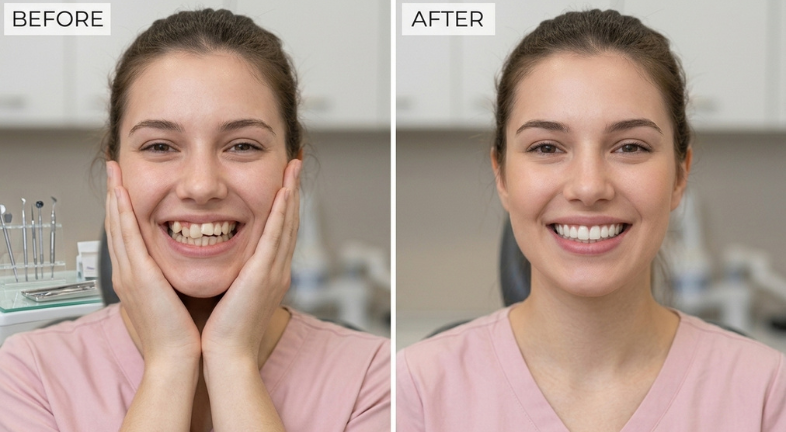 Do Clear Aligners Change Your Face Shape?
Yes, aligners can change your face shape slightly, mainly by changing the position and alignment of your teeth and, in some cases, your bite. But they don’t change your actual bone structure.
Read More What to Do If You Lose Your Aligners While Traveling
The first thing is to contact your provider and figure out if you can switch back to a previous tray or move to the next one. Losing your aligners while traveling can be stressful, but it does not necessarily mean your treatment will be disrupted. The most important thing is to act quickly. Look for your missing tray, wear your previous aligner if advised, and contact your provider for instructions on what to do next. In this guide, we’ll explain what to do if you lose your aligners while traveling, how a lost aligner can affect your treatment timeline, and what you can do to prevent it from happening again.
Read More Building Better Habits During Clear Aligner Treatment
Building better habits during clear aligner treatment can help you stay consistent with aligner wear, oral hygiene, and your treatment plan. Simple routines, such as wearing your aligners as directed, cleaning them regularly, and keeping track of your wear time, can make treatment easier to manage and help you stay on schedule. In this guide, we’ll cover the most important habits during clear aligner treatment and practical ways to make them part of your daily routine.
Read More



Heading