
 UK
 USA
 Australia
Key Takeaways
- Choose a sports mouth guard that fits securely, stays in place, and provides adequate cushioning without interfering with breathing or speech.
- Custom-fitted mouth guards generally offer the most individualised fit and are a strong option for athletes involved in frequent or high-contact sports.
- Stock, boil-and-bite, and custom mouth guards differ in fit, comfort, retention, cost, and adjustability.
- A protective athletic mouth guard should provide appropriate coverage and remain stable without requiring constant clenching.
- Athletes wearing clear aligners should make sure their sports mouth guard is compatible with their orthodontic appliance.
- Replace a sports mouth guard when it becomes damaged, significantly worn, uncomfortable, or no longer fits properly.
The right sports mouth guard should fit securely, stay in place during activity, provide adequate cushioning, and allow you to breathe and speak comfortably. For the best protection, choose a properly fitted custom mouth guard or a well-fitted mouth-formed option rather than a loose stock guard. That is why athletes should consider fit, material, sport, comfort, and level of protection before buying an athletic mouth guard.
The American Dental Association recommends properly fitted mouth guards for activities where dental or orofacial injuries are a significant risk. Understanding the differences between available options makes it easier to choose protection that you can wear consistently throughout training and competition without unnecessary discomfort.
What Is the Best Sports Mouth Guard for Athletes?
The best sports mouth guard is one that fits securely, remains comfortable throughout activity, provides appropriate cushioning, and does not interfere unnecessarily with breathing or communication. For athletes seeking the most precise fit, a custom sports mouth guard is typically the preferred option.
The right guard should stay positioned over your teeth without requiring you to constantly bite down to hold it in place. It should also feel stable when you run, jump, change direction, or experience contact.
For recreational athletes, a quality boil-and-bite guard may provide a practical balance of protection and affordability. However, athletes who participate frequently in contact or collision sports may benefit from a professionally fitted custom appliance.
How to Choose a Sports Mouth Guard
Choosing an athletic mouth guard involves more than picking the thickest or most expensive option. Consider these factors before making your decision.
Consider Your Sport and Injury Risk
The level of contact involved in your sport should influence the type of protection you choose.
Sports with a higher risk of collisions or impact include:
- Boxing and martial arts
- Rugby
- Football
- Ice hockey
- Field hockey
- Lacrosse
- Basketball
- Wrestling
Even sports that are not traditionally classified as collision sports can involve falls, accidental contact, or equipment strikes. A mouth guard can therefore be useful whenever there is a realistic possibility of an impact to the face or jaw.
Prioritise a Secure Fit
Fit is one of the most important characteristics of a sports mouth guard.
A properly fitting guard should:
- Stay securely over the teeth
- Require minimal clenching to remain in place
- Feel stable while speaking and moving
- Avoid excessive pressure on the gums
- Allow relatively comfortable breathing
- Avoid creating painful pressure points
If the guard frequently drops out, shifts position, or feels loose, it may not be providing the experience or protection you need.
Choose the Right Mouth Guard Type
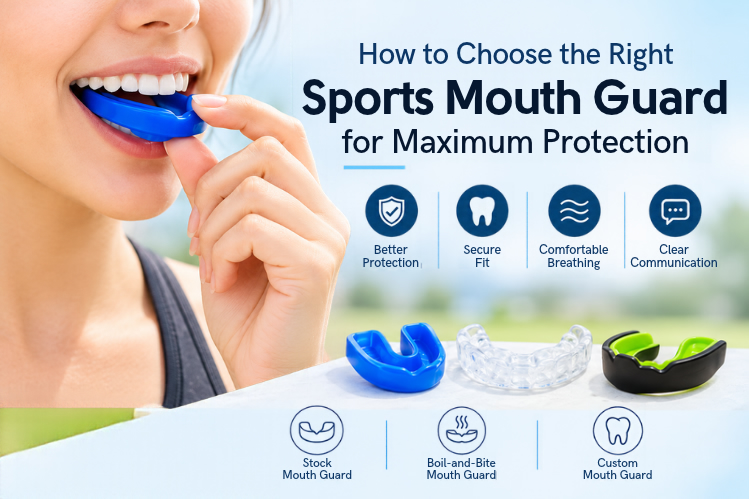
Sports mouth guards generally fall into three categories: stock, boil-and-bite, and custom-fitted.
Stock Mouth Guards
Stock guards come pre-formed and are ready to wear. They are generally inexpensive and widely available, but they offer limited adjustability.
Because the fit cannot be customised to the athlete's teeth, a stock guard may feel bulky or require the wearer to keep their teeth together to hold it in position.
Boil-And-Bite Mouth Guards
Boil-and-bite guards are softened in hot water and moulded around the teeth.
They offer more adaptability than stock guards and are usually more affordable than custom appliances. However, the final fit depends on the moulding process and the material's ability to adapt to the individual's teeth.
For athletes who want an accessible option without a custom dental fitting, a properly moulded boil-and-bite guard can be a reasonable choice.
Custom Sports Mouth Guards
Caspersmile custom sports mouth guards are made from impressions of the athlete's teeth.
Because it is designed around the individual's dental anatomy, it can provide a more precise fit than generic options. A well-designed custom guard can also be shaped to balance protection with comfort, retention, speech, and breathing.
This makes custom guards particularly attractive to athletes who train or compete frequently.
What Makes a Sports Mouth Guard Protective?
Protection does not depend on thickness alone. A guard must also stay where it is supposed to be when an impact occurs.
Material and Cushioning
A quality mouth guard should be made from durable material capable of absorbing and distributing some of the force associated with an impact.
A thicker guard is not automatically better if it becomes so bulky that the athlete avoids wearing it or cannot comfortably breathe and communicate.
Retention
Retention refers to how well the appliance stays in position without active clenching.
A secure guard allows the athlete to focus on the activity instead of constantly adjusting the appliance.
Coverage
The guard should adequately cover the teeth it is designed to protect without causing unnecessary irritation to surrounding tissues.
Its shape and design should also be appropriate for the athlete's individual dental anatomy and any existing dental appliances.
Custom vs. Boil-And-Bite Mouth Guards
The choice between custom and boil-and-bite options often comes down to fit, convenience, cost, and how frequently you participate in sports. Let’s look into custom vs boil-and-bite mouth guards.
| Feature | Custom Mouth Guard | Boil-and-Bite Mouth Guard |
| Fit | Highly individualised | Moulded at home |
| Retention | Generally excellent when properly made | Depends on moulding |
| Comfort | Usually more personalised | Varies |
| Cost | Usually higher | Usually lower |
| Convenience | Requires impressions, scanning, or fitting | Readily available |
| Frequent athletic use | Strong option | Practical option |
For occasional recreational activity, a well-moulded boil-and-bite guard may be sufficient. For frequent training, competitive sports, or athletes who prioritise precise fit, a custom option can be worth considering.
What About a Mouth Guard for Sports if You Wear Clear Aligners?
Athletes wearing clear aligners need to consider both dental protection and their orthodontic appliance.
Do not assume that an ordinary sports mouth guard will automatically fit correctly over clear aligners. The guard needs enough space for the aligners without becoming excessively tight or interfering with their position.
Depending on your treatment and the type of athletic activity, your orthodontic provider may recommend an appropriate protective appliance and advise whether wearing a sports mouth guard over clear aligners is right for you.
Can a Sports Mouth Guard Affect Breathing or Speech?
A poorly fitting or excessively bulky mouth guard can make breathing and speaking feel more difficult.
Athletes should therefore pay attention to how the appliance feels during actual movement rather than judging comfort while sitting still.
A properly fitted guard should allow the athlete to maintain comfortable breathing and should not unnecessarily restrict normal communication.
How Should a Sports Mouth Guard Fit?
A properly fitted athletic mouth guard should feel secure without being painful or excessively tight.
Look for these signs:
- It stays in place without constant clenching.
- It does not repeatedly fall or shift out of position.
- It does not cause significant gum irritation.
- You can breathe comfortably.
- You can communicate reasonably well.
- It does not create obvious pressure points.
- It covers the intended teeth adequately.
If the guard feels loose, causes persistent discomfort, or makes breathing difficult, reconsider the fit rather than simply tolerating the problem.
How to Protect Your Mouth Guard and Keep It Clean
Even the best sports mouth guard needs proper maintenance.
After Every Use
Rinse the guard with cool or lukewarm water after training or competition. Remove visible debris and allow it to dry completely before storing it.
Avoid very hot water unless the manufacturer's instructions specifically recommend it because heat can alter the shape of some mouth guards.
Store It Properly
Keep the guard in a ventilated protective case when you are not wearing it. Avoid leaving it loose in a gym bag where it can become contaminated or damaged.
Inspect It Regularly
Check for:
- Cracks
- Tears
- Holes
- Distortion
- Significant thinning
- Changes in fit
A damaged or poorly fitting guard should be replaced rather than continued indefinitely.
When Should You Replace a Sports Mouth Guard?
Replace your mouth guard when it becomes damaged, loses its fit, develops significant wear, or no longer feels comfortable.
Growing athletes may also need replacement as their teeth and jaws change. Similarly, orthodontic treatment can change the shape of the dental arches, meaning an older appliance may no longer fit properly.
Do not wait for visible damage if the guard has become loose or uncomfortable.
Common Mistakes When Choosing an Athletic Mouth Guard
Avoid these mistakes when selecting a mouth guard for sports:
Choosing Only by Price
The cheapest option is not necessarily the best value if it fits poorly or is uncomfortable enough that you stop wearing it.
Assuming Thicker Means Better
More material can increase bulk and affect comfort. Protection should be balanced with fit, retention, and usability.
Ignoring Your Sport
The demands of recreational basketball are different from those of rugby or boxing. Your level of contact should influence your choice.
Continuing to Use a Damaged Guard
A cracked, torn, or significantly worn guard should not be treated as good enough simply because it still covers the teeth.
Buying Without Considering Orthodontic Appliances
Braces and clear aligners can change what type of sports mouth guard is appropriate. Always account for your current dental appliance.
How to Get the Most Protection From a Sports Mouth Guard
The most protective mouth guard is the one that combines appropriate coverage, secure retention, comfortable fit, and consistent use.
Even a high-quality guard cannot provide its intended benefit if you leave it in your sports bag. Make wearing it part of your routine before practice and competition.
If you play a high-contact sport, train frequently, or have braces, clear aligners, crowns, bridges, or other dental considerations, getting advice from a dental professional can help you understand how to protect your smile during contact sports.
Final Takeaway: Choose Protection You Will Actually Wear
Choosing the right sports mouth guard comes down to fit, protection, comfort, retention, and the demands of your sport. Stock guards provide convenience, boil-and-bite options offer greater adaptability, and custom sports mouth guards provide the most individualised fit.
Whatever option you choose, it should stay securely in place without making breathing or communication unnecessarily difficult. For athletes who train regularly or participate in high-contact sports, prioritising a properly fitted guard can make protecting your smile a much easier part of every practice and competition.

Heading