


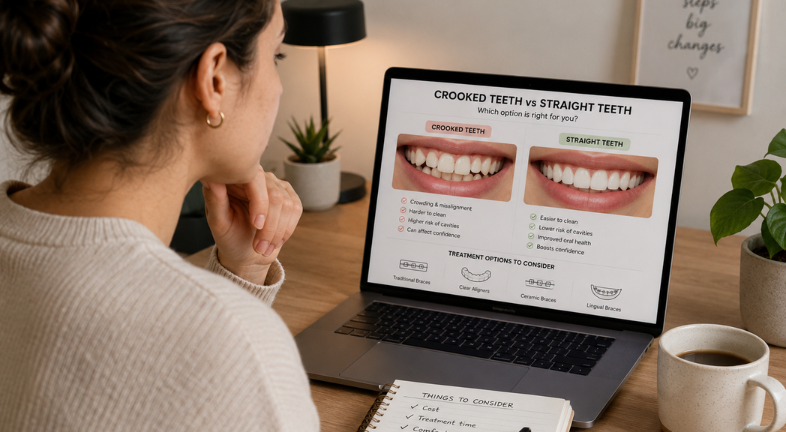
Key Takeaways
- Adults cannot straighten teeth naturally once permanent teeth and jawbones have fully developed.
- Mewing, tongue exercises, and DIY methods do not move permanent teeth.
- Clear aligners, braces, and jaw surgery are the only proven treatments for correcting tooth alignment.
- Common causes of misaligned teeth include genetics, childhood habits, mouth breathing, early tooth loss, injuries, and gum disease.
- Clear aligners are a discreet and effective option for treating many mild to moderate alignment issues.
- Retainers are essential after treatment to keep teeth from shifting back.
- Straightening teeth improves oral health, bite function, smile appearance, and confidence.
No, adults cannot straighten teeth naturally once permanent teeth and jawbones have fully developed. Adults need professional treatments such as clear aligners, braces, or corrective jaw surgery.
However, healthy habits during childhood may support proper oral development and reduce the risk of future alignment problems.
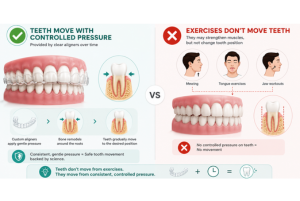
Many online claims suggest that mewing, tongue exercises, or jaw workouts can move teeth into place. However, there is no scientific evidence showing that these methods can reposition permanent teeth.
Teeth move when gentle and consistent pressure is applied over time. This biological process is the foundation of orthodontic treatments such as braces and clear aligners.
What Are Misaligned Teeth (Malocclusion)?
Malocclusion refers to teeth or jaws that do not fit together properly, affecting bite function, chewing, speech, oral hygiene, and smile appearance.
Healthy teeth meet evenly when the mouth closes, but misaligned teeth create uneven contact that increases tooth wear and makes plaque harder to remove.
Depending on its severity, malocclusion can range from a minor cosmetic concern to a condition that raises the risk of tooth decay, gum disease, bad breath, and other long-term oral health problems if left untreated.
Common types of malocclusion include:
| Type | Description |
| Crowding | Teeth overlap because there is insufficient space in the jaw. |
| Spacing | Visible gaps remain between the teeth. |
| Overbite | Upper front teeth excessively overlap the lower teeth. |
| Crossbite | Some upper teeth close inside the lower teeth. |
| Underbite | Lower front teeth sit in front of the upper teeth. |
| Open bite | Front teeth fail to touch when the mouth closes. |
Having misaligned teeth can be anything from a minor cosmetic annoyance to a serious bite issue that makes it hard to chew, speak comfortably, and keep your mouth healthy in the long run.
Without treatment, misaligned teeth normally become more difficult to clean. Crowded teeth create perfect hiding places for plaque. If it builds up, you are looking at a much higher risk for tooth decay, gum disease, and chronic bad breath.
What Causes Teeth Misalignment?
Common factors that cause teeth misalignment include: genetics, mouth breathing, childhood habits, early loss of baby teeth, poor oral hygiene, and dental injuries. Each factor affects tooth position differently.
Understanding the cause helps determine the most effective treatment.
Genetics
Genetics influence jaw size, tooth size, facial structure, and bite development. A child may inherit a small jaw from one parent and larger teeth from the other.
This combination often results in crowded teeth because there is not enough space for proper alignment. Inherited traits also drive common bite issues like overbites and underbites.
Childhood Habits
Certain childhood habits change the position of developing teeth and jaws. Three common examples include: Thumb sucking, tongue thrusting during swallowing, and prolonged pacifier use. Continuous pressure from these habits affects jaw growth and increases the risk of open bites.
Early Loss of Baby Teeth
Baby teeth maintain space for permanent teeth. When a baby tooth falls out too early because of injury, neighboring teeth gradually shift into the space.
Permanent teeth then erupt in the wrong position, causing spacing problems. Maintaining healthy primary teeth supports proper eruption of adult teeth.
Mouth Breathing
Chronic mouth breathing influences facial and jaw development during childhood. Breathing through the mouth instead of the nose changes tongue posture and muscle balance.
Over time, these changes contribute to narrow dental arches and bite irregularities. Treating these breathing issues helps support normal oral development.
Injury or Trauma
Dental trauma can change the position of a tooth immediately or interfere with future eruption. Examples include: Sports injuries, falls, and facial accidents. A displaced tooth may require orthodontic treatment after healing to restore ideal alignment.
Poor Oral Hygiene
Poor oral hygiene increases the risk of gum disease. As periodontal disease progresses, supporting bone gradually deteriorates. Teeth lose stability and begin to shift, creating new gaps or worsening existing crowding.
Daily brushing, flossing, and regular dental examinations help maintain healthy gums that support stable tooth alignment.
Professional Ways to Straighten Teeth
Many people search for how to align teeth at home, hoping that exercises, mewing, or DIY techniques can reposition their teeth. However, permanent teeth can only be moved safely through controlled orthodontic force.
Professional treatments such as clear aligners, braces, or jaw surgery gradually reposition teeth by applying precise pressure over time. Traditional braces effectively treat simple and complex orthodontic cases, while clear aligners offer a discreet, removable option for many mild to moderate cases.
Understanding how clear aligners work helps you determine whether they are the right option for your smile.
What Are Clear Aligners?
Clear aligners are custom-made, transparent trays that gradually move teeth into proper alignment using controlled orthodontic pressure.
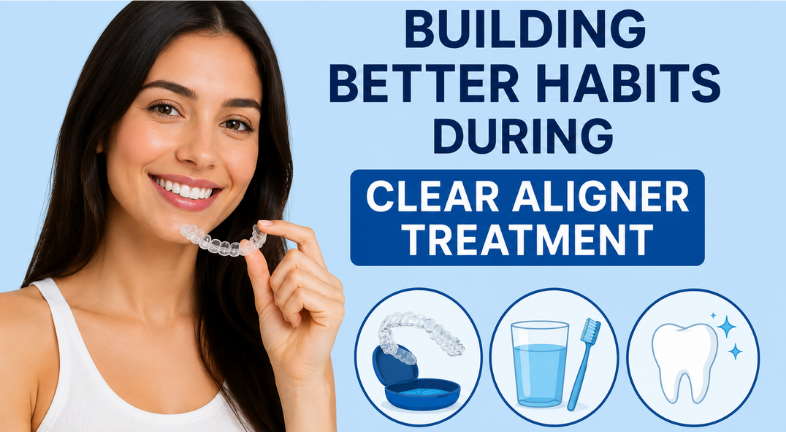
If you are wondering how to straighten teeth with clear aligners, treatment begins with a personalized plan that guides teeth into their ideal positions over time. Unlike traditional braces, aligners are removable, nearly invisible, and allow you to eat, brush, and floss normally.
They effectively treat many mild to moderate orthodontic issues, and brands such as Caspersmile provide dentist-directed clear aligner treatment for suitable cases.
How Clear Aligners Straighten Teeth
Clear aligners move teeth by applying precise pressure to specific teeth according to a digitally planned treatment sequence. Each new aligner continues the movement until the desired alignment is achieved.
Treatment begins with digital scans or dental impressions that create a custom treatment plan. Every aligner is manufactured to make small, precise adjustments, allowing the surrounding bone to remodel as the teeth shift.
Patients typically wear each aligner for 20 to 22 hours per day before progressing to the next set in the series. Consistent wear keeps tooth movement on schedule and produces predictable results. Most treatment plans include 15 to 40 aligners, depending on case complexity.
Who Is a Good Candidate for Clear Aligners?
Clear aligners treat mild, moderate, and selected complex orthodontic cases after professional assessment.
If you are asking, can adults straighten teeth with aligners, the answer is yes. Most adults with healthy teeth and gums can successfully correct mild to moderate alignment issues using professionally prescribed clear aligners.
More complex cases may require additional orthodontic treatment. Suitability depends on tooth movement requirements rather than age.
Mild to Moderate Cases
Clear aligners deliver the most predictable results for mild to moderate tooth misalignment.
These cases usually require controlled tooth movement without major changes to the jaw or bite. Common examples include:
- Mild crowding
- Moderate crowding
- Small gaps
- Mild overbite
- Mild crossbite
- Minor tooth rotations
Most patients with these conditions complete treatment using removable clear aligners alone.
Complex Cases
Complex orthodontic cases require a comprehensive clinical assessment before treatment.
Conditions such as severe crowding, significant underbites or overbites, major jaw discrepancies, teeth requiring extraction, or cases involving jaw surgery may need advanced clear aligner systems, traditional braces, or a combination of treatments.
A dentist or orthodontist will recommend the most appropriate option based on your teeth, bite, and jaw relationship.
Retainers after Treatment
Retainers preserve the final tooth position after active clear aligner orthodontic treatment ends.
Without retainers, teeth gradually drift because surrounding bone and soft tissues continue adapting after alignment.
Benefits of Straightening Teeth with Clear Aligners
Straightening teeth improves oral health, bite function, appearance, and long-term dental stability.
Better Oral Hygiene
Straight teeth create easier access for brushing and flossing. Food particles and plaque collect less easily between evenly spaced teeth, making daily oral hygiene more effective.
Healthier Gums
Properly aligned teeth reduce plaque retention and improve gum health. Healthy gums provide stronger support for teeth throughout adulthood.
Improved Bite Function
Balanced tooth alignment distributes chewing forces more evenly across the mouth. A balanced bite reduces excessive pressure on individual teeth and jaw joints.
Better Smile Appearance
Aligned teeth create a more symmetrical smile and improve facial aesthetics. Correct positioning reduces visible crowding, spacing, and uneven tooth edges.
Greater Confidence
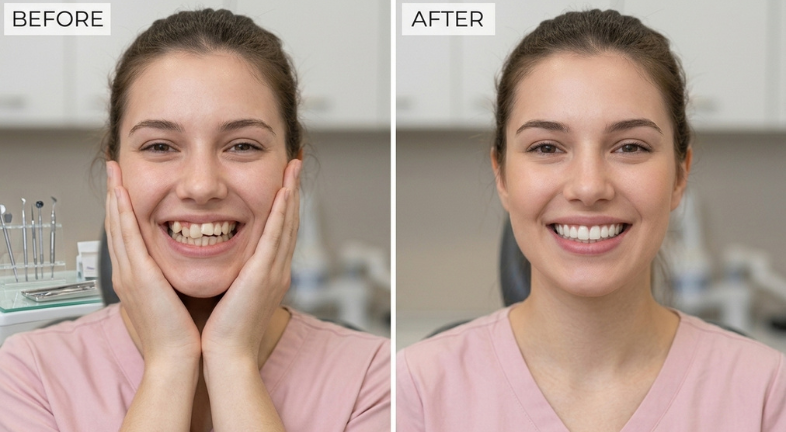
A straighter smile increases confidence during speaking, smiling, and social interaction. Many adults report improved self-esteem after completing orthodontic treatment.
Final Takeaways
Natural methods cannot move permanent teeth. If you want lasting, predictable results, orthodontic treatment such as clear aligners or braces remains the safest option.
Choosing the right treatment early can improve your oral health, bite, and confidence for years to come. Those looking for a convenient and affordable remote option may find the clear aligner treatment approach particularly attractive due to its flexibility, remote monitoring, and budget-friendly plans.





Heading