



Key Takeaways
- Most people can sleep with aligner pain safely, as mild soreness is a normal part of tooth movement.
- Sleeping with new aligners often feels tight at first, but discomfort usually fades within a few days.
- Knowing how to reduce aligner pain can make the adjustment period much easier.
- Temporary tight-time aligner discomfort does not usually mean something is wrong.
- Sharp, severe, or worsening pain should be evaluated by a dental professional.
- Switching to new trays before bed may help you sleep with aligner pain more comfortably.
- Consistent wear is important because removing aligners too often can increase discomfort.
- Mild aligner pain does not worsen malocclusions and often indicates treatment is working.
Yes, you can safely sleep with aligner pain in most cases, and a few simple adjustments can make those first nights much more comfortable.
Mild pressure, soreness, and discomfort are common when aligners shift teeth into new positions, especially after switching trays. The discomfort is usually temporary and manageable.
Understanding what’s normal, learning how to reduce aligner pain, and following clear aligner daily routine tips can help you sleep better while staying on track with your treatment.
Why Clear Aligners May Cause Pain During Sleep?
Clear aligners move teeth by applying controlled pressure. The pressure continues while you sleep, which is why discomfort can seem more noticeable at night.
During the day, you’re distracted by work, conversations, food, and other activities. At bedtime, you’re more aware of sensations inside your mouth, so even minor pressure can feel strong.
New trays create the most pressure in the first few days, since each one is designed to move teeth little by little. Research shows that orthodontic discomfort tends to peak within the first 24 to 48 hours after a new aligner is introduced.
When Is Aligner Pain Normal?
Normal aligner pain at night usually has predictable symptoms. You may notice:
- Mild pressure on several teeth
- Tenderness when biting down
- Tightness after switching trays
- Slight soreness for a few days
- Increased awareness of tooth movement
According to Healthline, discomfort from clear aligners is generally mild and temporary, with many users adapting within about a week.
| Did You Know? | A recent clinical study also found that aligner patients generally reported less pain and required fewer pain-relief medications than patients treated with fixed braces. |
How Long Does Normal Pain Last?
Most aligner pain improves significantly within two or three days after starting a new tray. Some pressure may linger longer, but severe soreness should not persist.
Most patients experience the greatest soreness during the first few weeks of treatment, then discomfort fades as teeth adapt to the planned movement, though occasional soreness may return briefly with each new tray.
When to Worry about Aligner Pain?
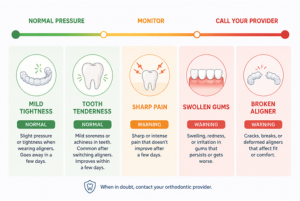
Not all pain should be ignored. Certain symptoms may indicate a problem with fit, attachment placement, gum irritation, or another dental issue.
Watch for:
- Sharp or stabbing pain
- Significant swelling
- Bleeding gums that continue
- Severe pain concentrated in one area
- Pain that worsens after several days
- Difficulty chewing or swallowing
- Signs of infection
If you notice any of these beyond the expected adjustment period, have it evaluated by a dental professional. Moreover, general pressure across multiple teeth is usually expected. A single tooth that feels extremely painful, loose, or unusually sensitive deserves closer attention.
How to Sleep with Aligner Pain
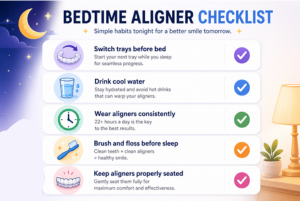
Many patients ask how to make bedtime easier during the first few days of a new tray. Here are several effective approaches:
Switch to New Trays at Night
Start a new tray right before bed so you sleep through the initial adjustment period instead of feeling the strongest pressure while awake.
Use Cold Water before Bed
A cool rinse can help soothe irritated tissues and reduce the sensation of pressure. Avoid extreme cold if you have sensitive teeth.
Stay Consistent with Wear Time
Removing aligners repeatedly because of discomfort often backfires. When trays stay out too long, reinserting them can feel even tighter. Most aligner systems require about 20 to 22 hours of daily wear for optimal results.
Maintain Excellent Oral Hygiene
Inflamed gums tend to be more sensitive. Brushing, flossing, and cleaning aligners thoroughly can reduce irritation and make night-time aligner discomfort easier to manage.
Keep Aligners Seated Properly
A poorly seated aligner can create uneven pressure and can slow tooth movement. Make sure your trays fit completely against your teeth, using provider-recommended seating tools if you have them.
Consider Provider-Approved Pain Relief
Some patients benefit from over-the-counter pain relief recommended by their dentist or orthodontist. Always follow professional guidance and avoid self-medicating.
Does Aligner Pain Mean Something Is Wrong?
No. Normal aligner discomfort does not worsen dental malocclusions.
Usually, it means the aligners are working, and tooth-supporting tissues are temporarily responding to orthodontic force, which is exactly how orthodontic correction happens.
However, ignoring serious fit issues or wearing trays incorrectly can affect treatment outcomes. That is why ongoing monitoring remains important.
Mistakes to Avoid When Feeling Aligner Pain
Some common responses when you’re feeling aligner pain can make the situation worse. Here is what you must avoid:
Removing Aligners Too Often
Frequent removal interrupts the adjustment process. Teeth can rebound slightly toward their previous positions, so reinserted trays feel tighter, and discomfort can drag on longer.
Ignoring Severe Symptoms
Normal pressure is expected; persistent sharp pain is not. If something feels significantly different from previous tray changes, contact your provider rather than waiting for the next appointment.
Advancing Trays Too Quickly
Moving to the next aligner ahead of schedule increases the risk of unnecessary discomfort and tracking issues. Follow the aligner wear time exactly as instructed.
Aligner Pain Is Temporary, Not Long-Term!
The most important thing to remember is that aligner discomfort is usually temporary.
If you’re trying to sleep with aligner pain, focus on consistency, good oral hygiene, and proper tray wear. With patience and a few comfort strategies, the adjustment period typically passes quickly.
Before long, what feels unusual today often becomes a normal part of your nightly routine.






Heading