%20(3).webp)
An Essix retainer looks simple, almost invisible, yet it plays a precise role in keeping teeth exactly where they belong. That simplicity often creates confusion. People wonder whether daily habits still apply or if the rules quietly change. Meals, drinks, routines, and even comfort feel different when a thin plastic shell sits over teeth. The question “can you eat with an Essix retainer?” isn’t trivial. It’s about protecting dental progress without turning everyday life into a checklist. Understanding how Essix retainers interact with food and drink sets expectations early and prevents avoidable damage later.
The short answer to “Can you eat with an Essix retainer?” is no, not safely. Essix retainers are not built to withstand chewing forces. Biting into food applies uneven pressure that can warp the plastic, create micro-cracks, or loosen the fit. Even soft foods compress against teeth in ways retainers cannot distribute evenly. Over time, this damage may be subtle but cumulative. A retainer that no longer fits perfectly stops doing its job. Eating with it in places risk both the retainer itself and the alignment it’s meant to protect, even when no immediate breakage occurs.
Essix retainers are clear, lightweight, and molded tightly to teeth, which makes them easy to ignore once worn consistently. Unlike bulky orthodontic appliances, they don’t demand attention or announce their presence. This convenience is exactly why mistakes happen. Because they feel like part of the mouth, people forget they are removable and treat them like permanent teeth. That leads to eating, sipping hot drinks, or chewing absentmindedly. The design prioritizes comfort and aesthetics, not durability. Recognizing that comfort does not equal resilience helps prevent habits that shorten the retainer’s lifespan and compromise alignment stability.
Eating with an Essix retainer introduces risks that often go unnoticed until damage becomes obvious. Food particles can become trapped between plastic and enamel, increasing bacterial growth and odor. Pressure from chewing may slightly deform the retainer, changing how it holds teeth overnight. Small distortions are hard to detect visually but significant functionally. Staining also becomes more likely, especially with pigmented foods. Over time, these factors reduce hygiene, comfort, and effectiveness. While one meal may not destroy a retainer, repeated exposure compounds the impact and accelerates the need for replacement or adjustment.
Essix retainers are removable stabilization tools, not active orthodontic devices. Braces and fixed wires are engineered to endure chewing forces daily. Essix retainers are not. Their job is passive: holding teeth in their final position when the mouth is at rest. The thermoplastic material is thin to remain discreet and comfortable. That thinness limits resistance to heat, pressure, and abrasion. Treating an Essix retainer like a fixed appliance misunderstands its role. Respecting its limitations preserves both its shape and its ability to maintain alignment over the long term.
Questions about beverages often follow eating concerns. Whether you drink with retainers depends entirely on what you are drinking. Cold water is generally safe and does not affect the plastic or trap residue. Other drinks introduce variables like heat, sugar, acidity, and pigment. These factors can stain, weaken, or warp the retainer. Drinking without removing it may feel convenient, but convenience often trades off with longevity. Understanding which drinks pose risks allows retainers to stay clear, odor-free, and structurally sound while still fitting comfortably over teeth night after night.
Daytime drinking habits often involve sipping slowly over hours, which increases exposure risk. Asking “Can I drink with my retainer in” matters because prolonged contact is more damaging than brief exposure. Sugary or acidic drinks bathe the teeth beneath the retainer, creating an environment where bacteria thrive. Without saliva circulation, enamel is more vulnerable. Even non-staining drinks can contribute to buildup when consumed repeatedly. Removing the retainer before drinking anything besides water protects both oral health and retainer clarity. Short interruptions in wear are safer than extended exposure to problematic liquids.
Tea seems harmless, but asking “Can I drink tea with retainers?” reveals an overlooked issue. Tea contains tannins, which are highly staining compounds. These pigments bind easily to clear plastic, turning transparent retainers yellow or brown over time. Heat also softens thermoplastic material slightly, increasing the chance of distortion. Even herbal teas can discolor retainers if consumed regularly. Stains are not purely cosmetic; they often come with odor retention. Removing the retainer before drinking tea preserves appearance, hygiene, and structural integrity, keeping the retainer discreet and comfortable for long-term wear.
Coffee combines nearly every risk factor for Essix retainers. Heat, acidity, and dark pigmentation work together to stain and weaken plastic. Drinking coffee with a retainer in place may not cause instant damage, but repeated exposure almost guarantees discoloration. Warping can occur subtly, affecting fit. Odor absorption is another concern, as coffee smells linger in porous materials. If coffee is part of a daily routine, removing the retainer is essential. Rinsing the mouth and retainer before reinserting reduces residue and helps maintain both oral freshness and retainer transparency over time.
An Essix retainer with tooth contact relies on precise, uniform pressure across surfaces. Chewing disrupts that balance. When food enters the equation, pressure becomes uneven and forceful. Certain teeth may absorb more impact, stressing specific areas of the retainer. Over time, this creates pressure points that weaken the plastic and alter how it grips teeth. The result is a retainer that feels looser or tighter in places. That imbalance compromises retention and comfort. Avoiding food while wearing the retainer keeps forces predictable and preserves the carefully engineered fit.
Hygiene issues often develop quietly. Eating with a retainer traps food debris against enamel, where brushing cannot reach until removal. This environment encourages bacterial growth, increasing the risk of cavities and gum irritation. Odors also develop faster when residue remains enclosed. Even meticulous brushers cannot fully offset this effect if food is regularly consumed with the retainer in place. Removing the retainer before meals allows natural saliva flow to assist in cleansing. Good hygiene practices extend beyond brushing; they include understanding when a device should not be worn.
Essix retainers are not permanent devices. Their lifespan depends heavily on care habits. Eating or drinking improperly accelerates wear, leading to cracks, cloudiness, or loss of fit. Most retainers last several months to a few years with proper use. Poor habits shorten that timeline significantly. Replacement frequency increases cost and inconvenience. Services like Caspersmile offer retainers that are designed with durability in mind, but no Essix retainer can withstand chewing. Treating the retainer gently preserves its function and reduces how often replacements are needed over the course of post-treatment retention.
Many people fear removing their retainer too often, but strategic breaks are healthier than constant misuse. Removing the retainer during meals and drinks prevents damage without compromising results. Teeth do not shift within minutes. Consistent nightly wear matters more than uninterrupted daytime use. Understanding this balance reduces anxiety and promotes better habits. Taking the retainer out during eating also reinforces cleaning routines. Short, intentional breaks protect the device while maintaining alignment. It is not constant wear that matters most, but correct wear during the periods that truly stabilize tooth position.
Proper reinsertion starts with cleanliness. After eating, brushing or at least rinsing removes debris that could become trapped under the retainer. The retainer itself should be rinsed before being placed back in the mouth. This simple habit prevents odor buildup and bacterial growth. Avoid hot water, which can warp the plastic. Gentle care after meals keeps the retainer comfortable and clear. Reinserting without cleaning transfers food residue directly into an enclosed space, undoing good oral hygiene practices. Clean transitions between eating and wearing protect both teeth and the retainer.
Retention is not maintained through dramatic effort, but through consistent, small decisions. Removing an Essix retainer before eating, choosing water over stained drinks, and cleaning regularly all contribute to stability. These habits may feel minor, yet their cumulative effect determines how well teeth stay aligned. Retainers work best when supported by mindful routines. Ignoring guidelines does not cause immediate failure, which makes complacency tempting. Long-term success depends on respecting the retainer’s purpose and limits. Small, repeated choices ultimately protect the investment made in straightening teeth.
Every meal presents a simple choice. Leaving the retainer in feels easier in the moment, but removing it prevents damage that is harder to fix later. Essix retainers are effective because they are precise, not because they are strong. Remembering that distinction changes behavior. Taking a few seconds to remove, store, and clean the retainer preserves its clarity, fit, and function. These small pauses protect months or years of orthodontic progress. Retainers succeed when they are treated as tools with boundaries, not as extensions of natural teeth.

Curated the best for your knowledge
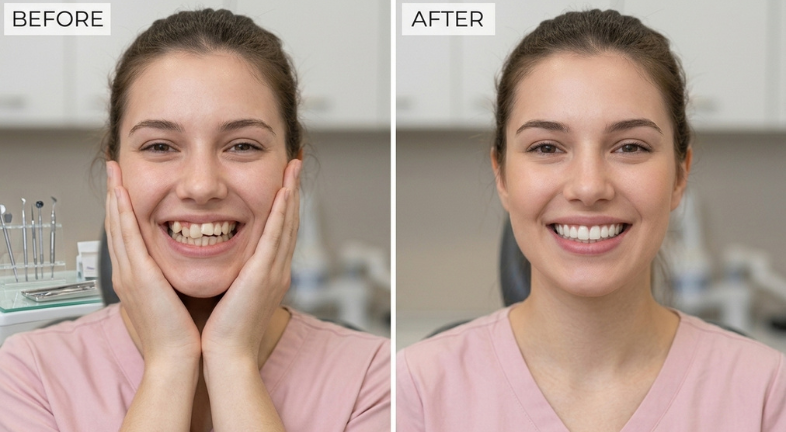 Do Clear Aligners Change Your Face Shape?
Yes, aligners can change your face shape slightly, mainly by changing the position and alignment of your teeth and, in some cases, your bite. But they don’t change your actual bone structure.
Read More What to Do If You Lose Your Aligners While Traveling
The first thing is to contact your provider and figure out if you can switch back to a previous tray or move to the next one. Losing your aligners while traveling can be stressful, but it does not necessarily mean your treatment will be disrupted. The most important thing is to act quickly. Look for your missing tray, wear your previous aligner if advised, and contact your provider for instructions on what to do next. In this guide, we’ll explain what to do if you lose your aligners while traveling, how a lost aligner can affect your treatment timeline, and what you can do to prevent it from happening again.
Read More Building Better Habits During Clear Aligner Treatment
Building better habits during clear aligner treatment can help you stay consistent with aligner wear, oral hygiene, and your treatment plan. Simple routines, such as wearing your aligners as directed, cleaning them regularly, and keeping track of your wear time, can make treatment easier to manage and help you stay on schedule. In this guide, we’ll cover the most important habits during clear aligner treatment and practical ways to make them part of your daily routine.
Read More



Heading