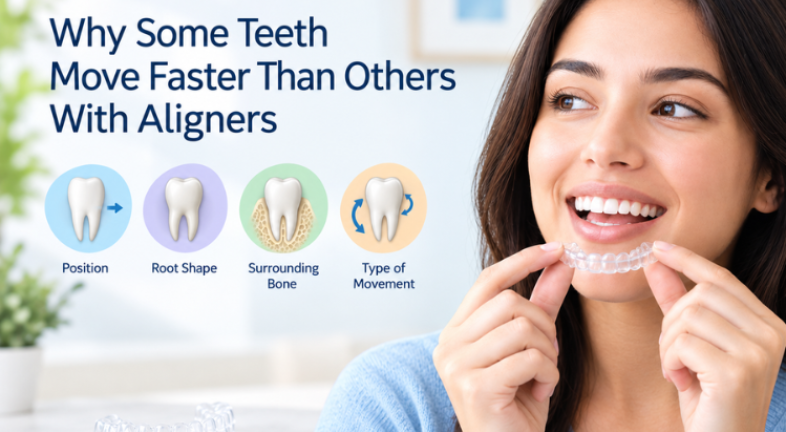
Teeth movement with aligners does not happen at the same speed for every tooth. Each tooth responds differently because of its position, root shape, surrounding bone, and the type of movement required. Some teeth show visible changes early in treatment, while others take longer to respond. Your aligner treatment plan accounts for these differences by applying controlled forces in a specific sequence. Understanding what affects the tooth movement timeline helps explain why one tooth can look straighter while another appears almost unchanged.
Teeth move through a biological process called bone remodeling. The pressure from an aligner creates forces around a tooth, and the surrounding bone gradually changes to allow the tooth to move into its planned position.
The speed of this process varies between teeth. Several factors influence how quickly a particular tooth responds.
Not all teeth have the same root shape or sit in the same position within the jaw.
A tooth with a shorter or more straightforward movement path can respond differently from a tooth with longer roots or a more complex position. Back teeth also have larger, more complex roots and provide important support for the bite, so moving them into a new position can require carefully controlled forces.
The direction and complexity of movement also affect how quickly a tooth progresses.
Simple tilting movements can appear relatively quick, while other movements take more control. These include:
This is why two teeth wearing the same aligner for the same number of hours can show different amounts of visible movement.
Front teeth can appear to move faster than back teeth, but this is not true in every case. Front teeth are often more noticeable because even a small change in their position is easy to see when you smile.
Back teeth can require more complex movement to maintain or establish the correct bite, making their progress less obvious.
The important comparison is not how quickly one tooth changes compared with another. It is whether each tooth is following its planned movement throughout clear aligner treatment.
Your individual biology plays a role, but treatment habits also affect progress.
Aligner wear: Wearing aligners for the prescribed number of hours keeps the planned forces working consistently.
Aligner fit: A tray that does not seat properly over a tooth may not deliver the intended force to that area.
Treatment complexity: More complicated tooth movements generally require additional stages.
Dental anatomy: Root shape, bone structure, tooth position, and spacing all influence orthodontic tooth movement.
Age and individual response: Biological differences between patients affect how tissues respond to orthodontic forces.
These factors explain why fast tooth movement in one area does not necessarily mean the rest of the teeth will progress at the same rate.
Yes. A tooth that consistently falls behind its planned position can extend the tooth movement timeline if additional aligner stages are required.
A small difference between an aligner and a tooth does not automatically mean there is a problem. Teeth sometimes progress at slightly different rates during treatment. However, a persistent gap, rocking aligner, or tooth that repeatedly fails to track can indicate that the planned movement is not occurring as expected.
Understanding clear aligner complications can help you recognize common tracking and fit issues during treatment.
Follow the wear schedule provided with your treatment and keep each aligner properly seated over your teeth.
Practical habits include:
Avoid moving to the next aligner simply because a certain tooth looks ready. The sequence is designed around the planned movements across the entire arch.
A tooth that shows little visible change for a short period is not automatically concerning. The situation deserves attention when the tooth consistently fails to fit the aligner, a visible gap remains between the tooth and tray, the aligner rocks, or the tooth appears increasingly out of position.
Your treatment provider can assess whether the tooth is tracking as planned and determine whether an adjustment or additional aligner stage is necessary.
Teeth movement with aligners varies because every tooth has different anatomy and movement requirements. Some teeth show visible changes quickly, while rotations, root movements, vertical movements, and more complex corrections take longer. Consistent wear and proper aligner fit help keep treatment progressing according to plan. If one tooth repeatedly fails to track, addressing the issue early helps prevent unnecessary treatment delays.

Curated the best for your knowledge
Why Some Teeth Move Faster Than Others With AlignersTeeth movement with aligners does not happen at the same speed for every tooth. Each tooth responds differently because of its position, root shape, surrounding bone, and the type of movement required. Some teeth show visible changes early in treatment, while others take longer to respond. Your aligner treatment plan accounts for these differences by applying controlled forces in a specific sequence. Understanding what affects the tooth movement timeline helps explain why one tooth can look straighter while another appears almost unchanged.
Read More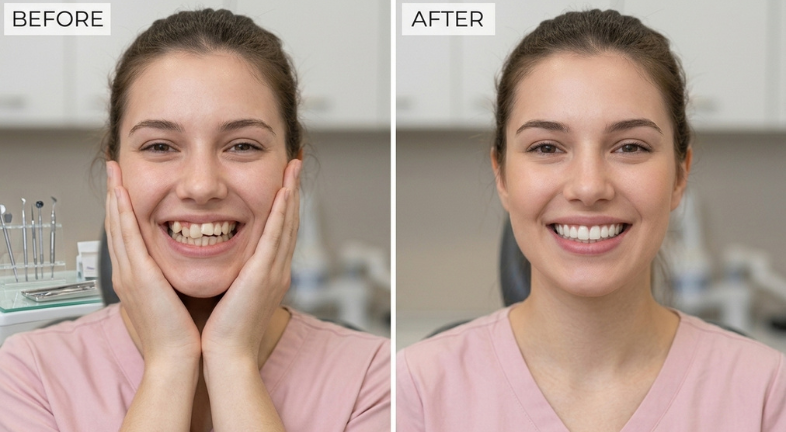 Do Clear Aligners Change Your Face Shape?
Yes, aligners can change your face shape slightly, mainly by changing the position and alignment of your teeth and, in some cases, your bite. But they don’t change your actual bone structure.
Read More What to Do If You Lose Your Aligners While Traveling
The first thing is to contact your provider and figure out if you can switch back to a previous tray or move to the next one. Losing your aligners while traveling can be stressful, but it does not necessarily mean your treatment will be disrupted. The most important thing is to act quickly. Look for your missing tray, wear your previous aligner if advised, and contact your provider for instructions on what to do next. In this guide, we’ll explain what to do if you lose your aligners while traveling, how a lost aligner can affect your treatment timeline, and what you can do to prevent it from happening again.
Read More



Heading