- What are retainers?
- When do I need retainers?
- What is the difference between retainers, clear braces, and clear aligners?
- For how long do you need to wear retainers after teeth straightening?
- What happens if I don’t wear my retainers?
- How do you keep your retainer clean?
- Are retainers comfortable to wear?
- Will people see I have a retainer?
Wearing retainers after teeth straightening treatment is a topic that confuses many orthodontic patients. Retainers and clear aligners are not the same things – one holds teeth in their current position, and the other moves them into their desired position. It can be a lot to sink your teeth into – literally, so we’re answering the most commonly asked questions about retainers for you.
What are retainers?
Retainers are custom-made devices, often composed of wires or clear plastic, designed to hold teeth in position after surgery or any method of realigning teeth. After braces are removed, teeth can shift back to their original positions. Retainers prevent this, helping to maintain the results of orthodontic treatment.
When do I need retainers?
Whether you’ve undergone at-home teeth straightening, had clear aligner therapy from your dentist, or worn braces, retainers will ensure your teeth stay straight once your treatment has finished.
Sometimes retainers may be prescribed as a straightening solution where there is only one tooth or gap involved. They can also be used to correct other conditions, such as tongue thrust or TMD issues such as teeth grinding.
What is the difference between retainers, clear braces, and clear aligners?
Not all orthodontic devices are created equal, and it’s important to compare apples with apples.
Retainers are necessary after teeth straightening to retain the position of newly aligned teeth and prevent them from moving back.
Clear braces are very similar to their metal counterparts, except they are a little more discreet and can be more comfortable. They are still bonded to the teeth and worn 24/7.
Clear aligners are custom-made removable plastic aligners or trays worn over the teeth like a mouthguard. Unlike braces treatment that involves wearing a single appliance throughout the duration of treatment, straightening the teeth with aligners involves wearing a series of trays sequentially until the teeth reach their desired position. Clear aligners can be removed to eat and clean the teeth and may even be available as a night-time only treatment.
In other words, an individual can often choose between clear braces and clear aligners, but unless your dentist has advised otherwise, you can’t select a retainer instead of braces or aligners.
For how long do you need to wear retainers after teeth straightening?
This question is very hard to answer as it depends entirely on your circumstances. Some patients may be advised to wear a retainer all day, every day, for up to twelve months. It’s also not uncommon to be told you need to wear your retainer every night for an indefinite period.
What happens if I don’t wear my retainers?
The reason your dentist or orthodontist will have advised you to wear your retainers is that they’re a crucial step in ensuring your teeth stay straight. If you don’t follow your dental team’s instructions about wearing a retainer, you run the genuine risk of having your teeth relapse and move back into a less desirable position.
Unfortunately, this is a lesson people often learn the hard way. In fact, many adults who choose clear aligner solutions for at-home teeth straightening have had orthodontic treatment in the past but become dissatisfied with the results over time.
How do you keep your retainer clean?
Retainers are relatively low maintenance, but you must always follow the instructions of your dentist or orthodontist. If you have a bonded retainer, that is, one that is permanently fixed in your mouth, you’ll receive instructions on how to floss and clean it from your dentist.
If you have a removable retainer, you can rinse it with tap water every time you take it out of your mouth. Doing this straight away will help ensure that no food particles harden on the device. Your dentist may recommend a soaking solution for your retainer, but it’s generally not needed. You can also brush many types of retainers with a soft-bristled toothbrush. It’s important to check with your dental team, though, and only use their recommended cleaners as some products can cause damage, which may lead to the retainer needing to be replaced more frequently.
Are retainers comfortable to wear?
They may be uncomfortable to start with, but you will get used to the sensation of wearing them. Custom-made, quality retainers that are a good fit will be the most comfortable.
Will people see I have a retainer?
It depends on the type of retainer your dental team prescribes you. Some retainers look very similar to clear aligners, which means they’re usually not visible unless you tell someone you are wearing them. Others may have metal wires or be slightly more noticeable, but chat with your dental team if you’d prefer to explore more discreet options.
Everyone’s teeth naturally shift and move over time, including those who have never had teeth straightening treatments. So if you think it may be time to take a fresh look at your teeth straightening options, consider either an at-home clear aligner kit or a new retainer.

 Are Ultrasonic Cleaners Worth It for Clear Aligners?
 The Aligner Diet: Can Clear Aligners Really Cause Weight Loss?
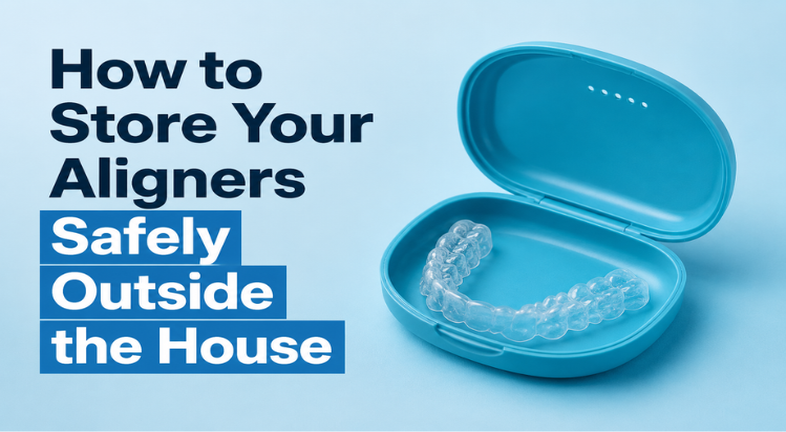 How to Store Your Aligners Safely Outside the House



Heading