.webp)
Key takeaways:
If you are one of those people who, after glancing at themselves in the mirror, wish that their teeth were slightly more aligned, then there’s good news for you. Teeth straightening at home is a new-age concept that enables anyone to straighten their teeth at home while still under the supervision of dental experts.
This concept has become quite popular in the UK, where people are getting increasingly busy, and dental treatment costs are rising. Instead of going to a clinic for regular sessions, you can now be provided with a series of aligners and put under remote supervision.
One of the most interesting aspects of at-home teeth straightening is how much of the planning happens digitally before you even wear your first aligner. This process is designed to replicate traditional orthodontic care but in a more streamlined way.
Instead of repeated chairside evaluations, your treatment begins with collecting accurate data about your teeth. From there, advanced software takes over to map out your journey step by step.
To start with, there is either an impression kit that is used at home or a digital scan that is carried out at a partner clinic. The impression kit involves creating molds of your teeth using dental materials. The digital scan, on the other hand, involves using technology to capture precise details.
Both processes work towards creating an accurate replica of your existing dental structure. Accuracy is key in this case since even a small deviation could impact how well your aligners work.
While at-home kits are popular since they do not require scheduling appointments, there is also the possibility that digital scans could be even more accurate.
Once your impressions or scans are submitted, specialized software creates a 3D model of your teeth and simulates their movement over time. This is where the magic really happens.
The system predicts how your teeth will shift with each aligner and generates a full treatment plan, often including a visual preview of your future smile. This step is not just about aesthetics. It also ensures that movements are safe and within biological limits.
Because of this digital mapping, every aligner you receive is part of a carefully calculated sequence rather than a generic solution.
While at-home teeth straightening may seem new, the underlying science is well established and rooted in orthodontic principles that have been used for decades.
Your teeth are not fixed in place as rigidly as they might feel. Instead, they are supported by a structure that allows for gradual movement when the right kind of pressure is applied consistently.
At the core of tooth movement is the periodontal ligament, which surrounds each tooth and connects it to the bone. When aligners apply gentle, controlled pressure, this ligament responds by allowing the bone to remodel.
On one side of the tooth, bone is broken down slightly, while on the other side, new bone forms to support the new position. This process is gradual and requires consistency, which is why wearing your aligners as directed is so important.
The key here is balance. Too much force can cause damage, while too little will not produce results. That is why professional planning remains essential, even in remote treatments.
Not everyone is an ideal candidate for at-home teeth straightening, but many people are pleasantly surprised to find that their case qualifies. Generally, this approach works best for mild to moderate alignment issues.
Here are the most common scenarios where it can be effective:
If your case involves more complex issues like severe misalignment or bite problems, a traditional orthodontic approach may still be recommended. However, for simpler concerns, at-home solutions can deliver impressive results.
Once your aligners arrive, the real work begins, and this is where consistency makes all the difference. The treatment is divided into phases, each represented by a new set of aligners.
Most aligner systems recommend wearing them for 20 to 22 hours per day. This means you only remove them for eating, drinking anything other than water, and cleaning your teeth.
The more consistently you wear them, the more predictable your results will be. Skipping hours or forgetting to wear them can delay progress.
Aligners are typically changed every one to two weeks, depending on your treatment plan. Each new set is slightly adjusted to continue moving your teeth along the planned path. This gradual progression is what allows for safe and effective alignment over time.
Compliance is arguably the most important factor in at-home teeth straightening success. Even the best-designed plan will not work if aligners are not worn as instructed. Think of it as a partnership between you and the treatment plan. The system provides the structure, but your discipline brings it to life.
In the UK, dental care is governed by strict standards to ensure patient safety, and at-home teeth straightening is no exception.
The General Dental Council oversees dental professionals and ensures that treatments meet ethical and clinical standards. This means that any reputable provider must involve qualified professionals in the planning and monitoring process. For instance, Caspersmile offers at-home teeth straightening under the supervision of certified dentists.
Even though your interactions may be remote, a licensed dental professional reviews your case, approves your treatment plan, and monitors progress. This oversight helps catch potential issues early and ensures that your treatment stays on track. This framework provides reassurance that convenience does not come at the cost of safety.
Maintaining good oral hygiene becomes even more important during at-home teeth straightening. Since aligners cover your teeth for most of the day, any trapped food particles or bacteria can increase the risk of issues like cavities or gum irritation.
Brushing and flossing after meals, as well as cleaning your aligners regularly, can help prevent these problems. It is also important to keep up with routine dental checkups, even if your orthodontic treatment is remote. Healthy teeth respond better to movement, so taking care of your oral health directly supports your results.
The duration of at-home teeth straightening varies depending on the complexity of your case, but most treatments fall between four and twelve months. After completing your aligner series, retainers are typically required to maintain your results. Teeth have a natural tendency to shift back, especially in the first few months after treatment. Wearing retainers as advised ensures that your new smile stays in place long term, making the effort you put into treatment worthwhile.
While many people start at-home teeth straightening for aesthetic reasons, the benefits often go beyond appearance. Straighter teeth can be easier to clean, which reduces the risk of plaque buildup and gum disease.
Improved alignment can also enhance your bite, which may reduce strain on your jaw and make chewing more comfortable. In this way, the impact extends into overall oral health.
Like any dental treatment, at-home teeth straightening comes with limitations. It is not suitable for severe cases, and improper use can lead to discomfort or ineffective results.
If you experience persistent pain, unexpected changes, or concerns about your progress, it is important to consult a dentist. Professional guidance ensures that any issues are addressed promptly. Understanding these boundaries helps set realistic expectations and ensures a safer experience.
The decision to opt for at-home teeth straightening, in essence, is a decision to find a solution that fits into your lifestyle without compromising on the end results. It is a solution that provides a balance of both, and that is why it is a very attractive option for many in the UK.
When you understand how it works, who it is for, and what it entails for you as an individual, you are able to go into this process with confidence. It is not just about the end results in terms of a straighter set of teeth, it is about taking control of your dental health in a very convenient and contemporary manner.

Curated the best for your knowledge
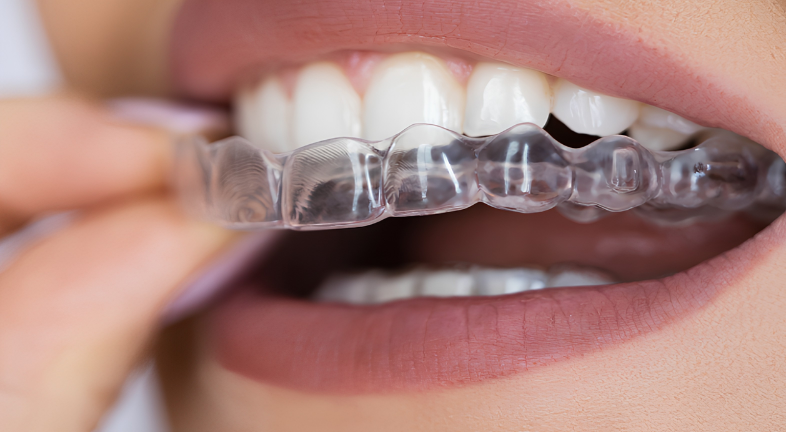 Are Clear Aligners Right for You? Common Dental Issues They Can Fix
Clear aligners can straighten mild to moderate cases of crowding, spacing, crooked teeth, and certain bite concerns without the appearance of metal brackets. These custom-made, transparent trays gradually apply controlled pressure to guide teeth into better positions, making them a discreet and convenient teeth-straightening option for eligible individuals.
Read More Why Your Aligners Stop Tracking and How to Fix It
Aligners stop tracking when they no longer fit snugly against your teeth the way your treatment plan intended, and it's almost always caused by wear time, tray damage, or a movement that's simply taking longer than expected. The good news is that most of these issues can be corrected without starting over. Below, you'll find the real reasons why aligners stop tracking, how to spot the early signs, and the exact steps that get treatment back on schedule.
Read More How Clear Aligners Affect Jaw Muscles
To answer the question, “How do clear aligners affect jaw muscles?”, clear aligners can affect the jaw muscles, but usually only mildly and temporarily. As your bite gradually shifts, the muscles you use for chewing adapt to the new tooth positions. Most people feel little to nothing at all. When soreness does show up, it tends to fade within a few days. This is different from a jaw joint (TMJ) disorder, which involves the joint itself rather than the surrounding muscle tissue.
Read More



Heading